Both steel and aluminium can make a good conservation rooflight, and which is better depends on the roof, the building and the officer who reads your application. Steel gives the slimmest, most period-looking frame. Aluminium gives a lighter, easier-fitting unit with a thermal break built into the section. This guide sets the two side by side, and then shows how to decide.
What the frame does for a conservation rooflight
The frame is the part of a steel vs aluminium conservation rooflight decision that people notice first, and the glass is the part that does the work. The frame holds the glass, carries the load, and decides how the unit looks from the road.
A conservation rooflight is a fixed or opening glazed unit that sits low in the roof plane, close to flush with the slates or tiles. It is meant to look like the small cast iron lights that were set into old roofs, not like a modern roof window with a deep box around it. If you want the full definition first, our page on what a conservation rooflight is covers it.
The frame material changes five things you can see or feel:
- How wide the frame looks at the edge of the glass.
- How much the unit weighs, which matters on an old roof structure.
- What the finish looks like on day one and in year ten.
- How well the frame resists the flow of heat from warm air inside to cold metal outside.
- How easily the unit can be made in an odd size or fitted into a tight gap between rafters.
None of these is dramatic on its own. Together they add up to a rooflight that either sits quietly in the roof or draws the eye. That is the test a conservation officer applies, and it is a fair one.
Steel: slim, traditional and heavier
Steel is the original material for this job. It can be formed into very thin sections that stay rigid, which is why steel conservation rooflights have the narrowest frame of any type. The frame looks like the old cast iron lights it is copying.
Steel is strong, so the bars and the perimeter can be fine. A slim perimeter means the glass fills more of the opening and the unit sits neatly between rafters at the standard spacing. On a slate roof that is often what makes the rooflight settle into the roof from the street.
The price of that slimness is weight and finish. Steel is denser than aluminium, so a large unit is noticeably heavy to lift onto a roof and to hold in position while it is fixed. Two people on a scaffold handle it differently from one. The roof structure beneath also has to carry it, which on a Victorian or earlier roof with modest timbers deserves a look at the survey.
The finish needs thought too. Bare steel rusts, so the frame is galvanised, treated and then coated. A good coating system lasts, and it should be specified to suit the setting. The cut edges and any fixings are where a coating system is most at risk, which is why the factory finish matters more than anything done on site.
Steel also conducts heat readily. Without a break in the section, a steel frame can run cold on the inside face in winter, and cold metal in a warm room is where condensation collects. Modern steel conservation rooflights deal with this in the design of the frame and the glazing, but it is a point to ask about directly.
Aluminium: lighter, with the thermal break built in
Aluminium is the practical alternative. It is light, it does not rust, and it can be extruded into a section that has an insulating thermal break running through it. That break separates the inside face from the outside face so the frame stays warmer indoors.
Weight is the clearest advantage. A lighter unit is easier and safer to position, and it puts less load on old timbers. Where a roof has been altered over the years and the rafters are not quite where a drawing says, a lighter rooflight gives more room to adjust.
Aluminium sections are extruded, which means the profile is a shaped hollow tube, and the shape has to hold a thermal break and a seal. That tends to give a slightly wider frame than steel for the same strength. The difference is small on a well-made unit, but it can be seen when the two sit side by side, and it is a fine point for a listed building.
Finish is where aluminium is strongest. Powder coating is applied in a factory, cures hard and comes in a wide range of colours, including the dark greys, blacks and greens that suit old roofs. Aluminium also does not corrode the way bare steel does, so a chipped coating is a cosmetic matter rather than the start of a rust problem.
Aluminium can also be made in unusual sizes more easily, and the extrusions take a range of glazing builds, including a laminated inner pane for quieter rooms.
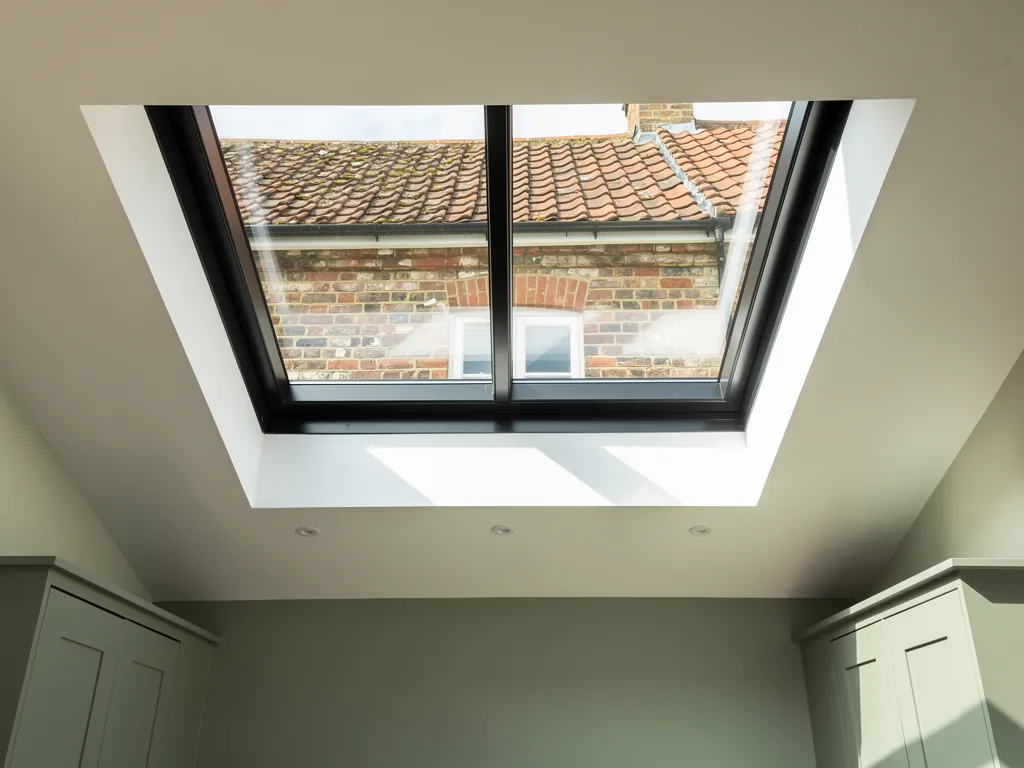
Steel and aluminium side by side
The table sets out the differences that matter on a roof. It is a general comparison, and individual products vary, so treat it as a starting point for the survey rather than a verdict.
| Point | Steel | Aluminium |
|---|---|---|
| Frame width | Slimmest | Slightly wider |
| Weight | Heavier | Lighter |
| Thermal break | Needs careful design | Built into the section |
| Finish | Galvanised, then coated | Factory powder coat |
| Colour range | Good | Very wide |
| Odd sizes | Often made to order | Usually simpler |
| Period look | Closest to cast iron | Close when well detailed |
Read the table by asking which row matters most for your roof. If you are in a conservation area and the rooflight faces the street, frame width may decide it. If you are replacing a unit over a bedroom and want a warm frame, the thermal break may.
Getting the cast iron look without cast iron
Real cast iron rooflights from the 19th century are rare now, and a new unit cannot be made in the same way. What you can have is a cast iron style conservation skylight that copies the proportions of the old one: a low profile, a flat plane of glass, a fine frame and, where the original had them, slim glazing bars.
The details that give that character are simple.
- A flush or near-flush sit, so the glass follows the roof line.
- A slim perimeter, so the frame does not read as a box.
- A dark, matt finish, because shiny paint draws the eye and old iron was never shiny.
- Glazing bars only where they belong, at a sensible spacing for the size of the light.
Steel copies this most closely, because the real thing was a slim metal section too. Aluminium can get very near it with a good profile and a matt coating. Our guide to glazing bars on conservation rooflights explains when bars help the period look, and when they only add lines and cost.
The sit matters as much as the material. A slim frame on a high kerb looks like a modern roof window. The same frame bedded down in the roof plane looks like part of the roof. How that is achieved is covered in how flush fitting conservation rooflights sit in the roof.
Thermal break, condensation and what the glass adds
Metal frames carry heat away from a room quickly, and the thermal break is the answer to that. It is a strip of low-conductivity material set between the inner and outer parts of the frame, so the inner face stays closer to room temperature.
Aluminium frames usually have a polyamide break running through the extrusion as a matter of course. Steel frames reach a similar result in other ways, such as a warm inner liner, a thermally separated glazing carrier or a careful choice of glazing spacer. The result is what counts, not the method, so ask how the particular unit keeps its inner face warm and ask to see the section.
The glass does a large share of the thermal work. A double glazed conservation rooflight with a low emissivity coating and a warm edge spacer does far better than the frame alone suggests, and the frame is a small fraction of the total area on a typical unit. Our page on double glazed conservation rooflights and heat loss goes through what the glass and the frame contribute. Building Regulations Part L sets limits on heat loss for new and replacement rooflights, and we install to current Building Regulations. Listed buildings and some protected buildings are treated differently under Part L, and the position is checked for the address.
Condensation follows the cold surface. A frame that stays warm on the inside gives moisture less to settle on, and good ventilation in the room, under Part F, does the rest. A steel frame with a poor break in a steamy bathroom will show it sooner than a well-broken aluminium one.
Quiet, rain and the sound of the metal
Because our work is about quiet light, it is fair to say where the frame material affects sound. It does, though less than the glass.
The frame is mostly a structural and sealing element. Sound passes through the glass first, so the quiet of a conservation rooflight comes mainly from the glazing build: a laminated inner pane, sensible glass thickness and a proper cavity. That is covered in quieter glazing for conservation rooflights.
The frame matters in two smaller ways. First, the seals and the way the frame is bedded into the roof decide whether there is a gap that lets sound or draughts through. Second, a thin, stiff metal section can ring a little if rain hits exposed bars, and a coating, a gasket or the way the bars are capped changes that. A flush unit under a slate or tile roof is also sheltered by the roof around it. Our answer on whether conservation rooflights are noisy in the rain explains the mechanism.
In practice, the same acoustic glass can go into either a steel or an aluminium frame. We write the choice into the quiet spec that comes with every quote, along with the seals and the way the unit is bedded.
What a planning officer is likely to ask
Officers rarely write "steel" or "aluminium" on a decision notice. What they look for is the effect on the roof: how much of the roof is glazed, how flush the unit sits, how thick the frame looks and how dark and matt the finish is. Material matters because it shapes those things.
On a listed building, or a roof in a conservation area that faces the street, a slim steel frame is often the easier case to make. It looks closest to the original fabric and gives the narrowest frame. An officer sees a modest, familiar detail.
On a rear roof slope, a side slope, or a roof the public cannot see, an aluminium rooflight with a tidy profile is usually perfectly acceptable, and it may be the better technical choice. A good aluminium section in a matt dark finish can look very similar from any distance.
What tips a decision is usually a short set of details, not the metal:
- Sit the unit flush, or as close to flush as the roof allows.
- Keep the frame slim and the finish dark and matt.
- Match the unit to the roof covering, so it lines up with the courses.
- Limit the number of units, and keep them modest in size.
Our guide to what a conservation officer looks for in a rooflight expands on this. Whether consent is needed at all depends on the building and the roof slope, so the conservation status of the address is checked before anything is specified.
A way to decide for your roof
Start with the building and work inwards. The roof covering, the age of the timbers and the street view settle most of the decision before you compare frames.
Choose steel when:
- The building is listed, or the roof faces a street in a conservation area.
- You want the nearest match to an old cast iron light.
- The roof structure is sound and can carry the extra weight without concern.
Choose aluminium when:
- The rooflight is on a rear or side slope that is not prominent.
- The roof timbers are old or altered, and a lighter unit is easier to fit.
- You want a wide colour choice, or a frame that stays warm inside with a proven thermal break.
- The unit is an unusual size, or has to open.
Some roofs suit both. A Weald cottage with a clay tile roof may take a steel unit on the street side and an aluminium one at the back, which is a reasonable approach where the two sit on separate slopes and are not seen together. For the colour itself, read what colour a conservation rooflight should be.
Steel or aluminium on your survey
At the survey we look at the roof from above and below. From the loft we see the rafter spacing, the condition of the timbers and where any old opening sat. From outside we look at the covering and what the public sees.
Then we put two written options in front of you, with the frame material, the glazing build, the finish and the way the unit sits in the roof. Each option is tied to the room underneath, so a bedroom under a flight path, a home office or a stairwell gets the glass that suits it. The choice between steel and aluminium is yours, made with the planning position known.
If you are ready to start, get a quote and tell us the roof covering, the age of the house and whether it is listed. Our parent page on conservation rooflight installation in Crawley shows how the whole job runs, from survey to made-good finish, with a 10-year workmanship guarantee.
Questions about frame metal on old roofs
Will a steel conservation rooflight rust?
A properly made one should not. The steel is galvanised and then coated in a factory, and that system is what protects it. The risk is at cut edges and damaged coating, so the quality of the finish and the care taken in handling the unit both matter. We specify the coating for the setting.
Is aluminium acceptable on a listed building?
It can be, but each case is judged on its own merits by the conservation officer, and steel is often the easier argument on a listed roof. Frame width, finish and how flush the unit sits usually carry more weight than the metal itself. Consent is checked for the address before we specify.
Does steel or aluminium keep the room quieter?
Neither frame decides it. The glazing build does most of the work, with seals and bedding adding to it. A laminated acoustic inner pane can go into either frame, and the choice is written into the quiet spec.
Can I mix steel and aluminium rooflights on one roof?
Yes, where they sit on separate slopes and are not read together. Two different frames in the same roof plane would look inconsistent, so within one slope we keep to one material, one finish and one sit.