Service · Crawley and 30 miles around

Electric rooflight installation in Crawley, with air on demand

An opening rooflight lets warm air out and daylight in, and an electric one does it from a switch and shuts itself in the rain. We choose the drive, the glass and the seals for the room, and write it into your quiet spec.

Get a quote What is a quiet spec?

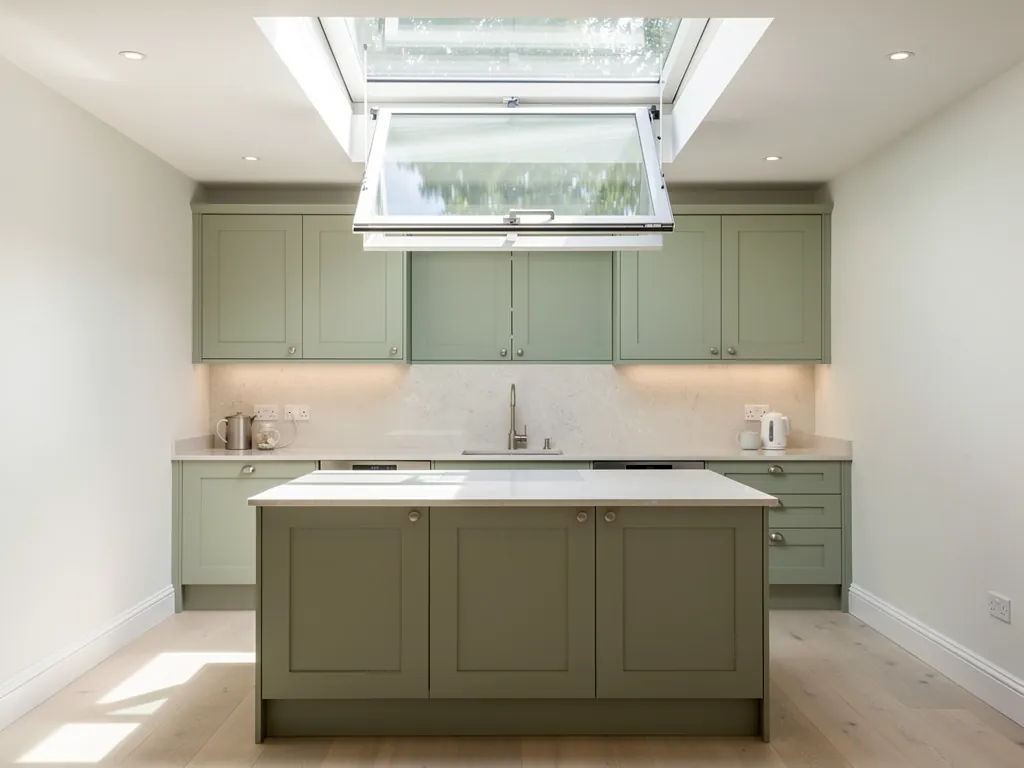
An electric opening rooflight propped open on a flat roof
  • 10-year workmanship guarantee
  • Building Control notification handled
  • Fitted to current Building Regulations
  • A quiet spec with every quote
  • Crawley and 30 miles around

Two jobs

A rooflight that opens, and the two jobs it does

An opening rooflight lets warm air out and light in, and gives you the choice of a sealed, quiet room or a ventilated one.

An opening rooflight is a window in the roof that lets the room breathe as well as see. An electric one does the lifting for you, from a wall switch, a remote or a sensor, and shuts itself when rain starts.

Warm air rises. That is the whole argument for putting an opening pane at the highest point of a room. A loft bedroom in July, a kitchen extension with the oven on, a stairwell that holds the heat of the whole house: each has a ceiling where the stale, warm air collects, and a rooflight that opens lets it out. Air is pulled in from a window or door lower down to replace it, and the room changes its air without anyone opening three windows and propping a door.

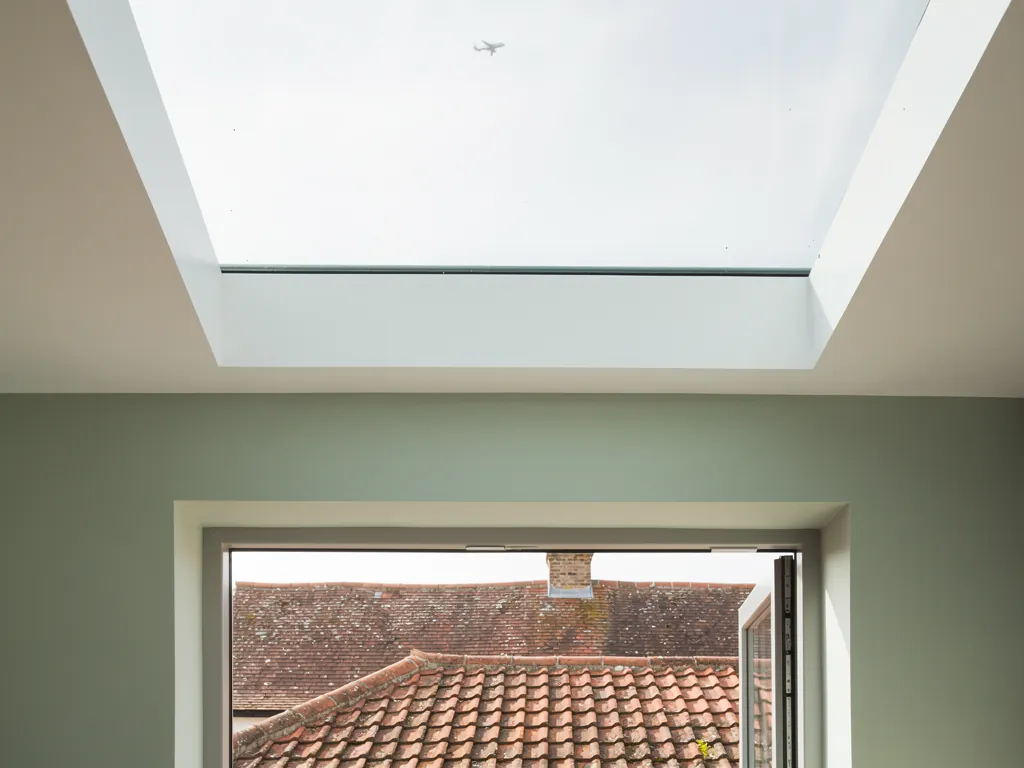
The second job is light, which any rooflight does. A fixed pane brings it in and stops there. An opening one brings it in and gives you the choice of a sealed, quiet room or a ventilated one. That choice matters more than it sounds, because the same hole in the roof that lets out the heat will, when open, let in whatever is outside. Around Crawley that can mean aircraft on the Gatwick routes, the M23 and A23, the Brighton main line through Three Bridges, or simply a garden with a lawnmower in it. We plan the opening with that in mind, and we write it down in the quiet spec that comes with every quote.

Electric and opening rooflight installation covers four kinds of product. They are worth naming now, because the rest of this page keeps coming back to them:

  • a top-hung or centre-pivot roof window on a pitched roof, opened by hand or by motor;
  • a flat glass rooflight on a kerb, hinged along one edge and lifted by an electric actuator;
  • a sliding rooflight, where a glazed panel runs back over a fixed one to make a large opening;
  • a roof access hatch, a hinged, glazed lid that gets you onto a flat roof or terrace.

Each one suits a different room and a different roof. If you are still weighing whether a roof window is the right product at all, the roof window installation page covers the pitched-roof side, and flat roof rooflight installation covers the fixed glass that an opening version is built from. Our home page sets out the whole range of skylight and rooflight work across Crawley and the 30 miles around.

NextElectric or manual: how much of the lifting should a motor do

Motor or hand

Electric or manual: how much of the lifting should a motor do

A motor earns its place once the glass is out of arm's reach, and it is the only kind that can close itself in the rain.

A manual rooflight is cheaper to buy and has nothing to fail. An electric one is the only sensible choice once the glass is out of arm's reach, and it is the only kind that can close itself in the rain.

Start with reach. A roof window in a sloping loft ceiling sits within a long arm of the floor, so a hand pole or a bar at the bottom of the sash opens it easily. A rooflight on a flat roof over a kitchen, three metres up, or over a stairwell, six metres up, does not. A pole that length is awkward, and nobody uses it twice. Nobody opens a window they cannot reach, which means the ventilation you paid for goes unused.

Then think about who uses the room. A motor helps anyone with limited grip or a bad shoulder, and it helps in a house where the window is opened and closed a dozen times a week. The guide on whether an electric rooflight is worth it over a manual one goes through that trade in detail. The table below sets out the four ways a rooflight can be powered.

Manual pole or handle

How it works
You lift the sash by hand
Suits
Low loft windows
Watch for
Reach, and being forgotten

Mains-fed motor

How it works
Low-voltage actuator from a transformer
Suits
Any room with a power point or spur nearby
Watch for
A cable route through the roof build-up

Solar motor

How it works
A small panel charges a battery
Suits
Bright roofs with no easy cable route
Watch for
Shaded panels, battery life

Smart or sensor-led

How it works
Rain, heat or timer commands the motor
Suits
Rooms with a summer heat problem
Watch for
Settings that need agreeing with the household
DriveHow it worksSuitsWatch for
Manual pole or handleYou lift the sash by handLow loft windowsReach, and being forgotten
Mains-fed motorLow-voltage actuator from a transformerAny room with a power point or spur nearbyA cable route through the roof build-up
Solar motorA small panel charges a batteryBright roofs with no easy cable routeShaded panels, battery life
Smart or sensor-ledRain, heat or timer commands the motorRooms with a summer heat problemSettings that need agreeing with the household

A mains-fed motor is the dependable option, and it is the usual choice for an electric installation in a Crawley home. The guide to how electric opening rooflights work covers the parts: the motor, the control unit, the transformer and the sensors. Where a motor is wanted on a rooflight already in place, the answer to can a manual opening rooflight be motorised depends on the frame, and we check that at the survey.

Solar power sounds neat, and on a south-facing roof with open sky it can be. The catch is that a solar panel needs daylight to charge the battery, and a rooflight over a deep, shaded well does not always get enough. We set out the trade-offs in the page on solar powered opening rooflights.

NextHinged, sliding or hatch: the shape of the opening

Shape of the opening

Hinged, sliding or hatch: the shape of the opening

How a rooflight opens decides how much air moves, how much rain it sheds and whether you can step through it.

How a rooflight opens decides how much air moves, how much rain it can shed and whether you can step through it. Hinged, sliding and hatch types are three different tools, not three price points.

A hinged rooflight lifts along one edge, like a cold frame. It is the simplest opening on a flat roof, it takes a standard-sized kerb, and its actuator is small. The opened pane also acts as a little shield against the prevailing wind, which matters for rain and for noise, since the gap faces away from the direction you choose. Its limit is the opening angle. A hinged pane opens to an angle, not flat, so the clear gap is smaller than the glass. The guide to hinged or sliding: choosing an opening rooflight puts the two side by side.

A sliding rooflight is a different animal. A glazed leaf travels on rails over a fixed leaf, and the opening is the area that the moving glass uncovers. For a roof terrace it is the answer. You can walk through it, stand under open sky, and pull it closed behind you. Sliding units reach sizes that no hinged pane can, which is why they appear over stairwells that lead to a terrace and over big kitchen extensions. Two questions come up every time, and both have their own pages: how big a sliding rooflight can be and whether a sliding rooflight is watertight when closed. The short answer to the second is that the seals and the drainage channels are designed for it, and the fitting details do the rest. For terrace access in particular, see sliding rooflights for roof terrace access.

Three tools, not three price points

  • HingedLifts along one edge on a standard kerb, with a small actuator. The opened pane shields the gap from the wind.
  • SlidingA glazed leaf runs on rails over a fixed one. It reaches sizes no hinged pane can, and suits a roof terrace.
  • Roof access hatchA lid you climb through, for flat roofs that carry plant, a green roof or a maintenance walkway.

A roof access hatch has a different purpose. It is a lid you climb through, not a window you open for air, although a glazed one does both. Flat roofs that carry plant, a green roof or a maintenance walkway need a way up that is not a ladder against the wall. The page on roof access hatch rooflights for flat roofs covers how they fit, and the answer on whether a roof access hatch needs Building Regulations approval explains where the rules bite.

If the glass itself is to be walked on, that is a separate product with a separate build. Our walk-on rooflight installation page covers it.

NextPower, wiring and the electrician's part in it

Power and wiring

Power, wiring and the electrician's part in it

The motor is low voltage, but the supply that feeds it is ordinary house wiring, and the cable route is planned at the survey.

An electric rooflight runs on a small low-voltage motor, but the supply that feeds it is ordinary house wiring. The cable route is planned at the survey, because it is the part of the job that is hardest to change later.

Most actuators run from a transformer that steps mains electricity down to a low voltage, often twenty-four volts. The transformer sits somewhere dry and reachable, usually in the ceiling void beside the rooflight, in a cupboard, or at the consumer unit. From there a thin control cable runs to the motor. The low-voltage side is light work. The mains side, the spur that feeds the transformer, is fixed wiring in a dwelling, and that falls under Approved Document P. It is installed and tested by a qualified electrician, and the job is notified where the rules require it.

The route matters more than the wire. In a new kitchen extension, the cable can be run in the ceiling before the plasterboard goes up, and the job is tidy and invisible. In an existing room, a finished ceiling makes it harder, and the question becomes where the cable can travel without opening up half the plaster. We walk the route at the survey, agree where the switch goes, and say plainly if a short section of ceiling has to be opened and made good. The guide to wiring and powering an electric rooflight goes through the options, and the answer on whether an electric rooflight needs an electrician sets out who does what.

What gets settled at the survey

  • TransformerSteps mains down to a low voltage. It sits somewhere dry and reachable, often in the ceiling void.
  • Cable routeEasiest before the plasterboard goes up. In a finished ceiling the route takes more thought.
  • Switch positionAgreed at the survey, and decided before the plasterer arrives.
  • The electricianThe mains spur is fixed wiring, installed and tested by a qualified electrician under Approved Document P.
  • Power cutSome models hold the pane, some close it on a backup battery, and the usual provision is a manual release.

Three practical points save trouble:

  • Decide the switch position before the plasterer arrives, not after.
  • Leave the transformer accessible, with a little slack in the cable.
  • Keep the control cable apart from the mains spur, so that a fault in one does not show up in the other.

A power cut is the obvious worry. What an electric rooflight does when the mains fails depends on the model. Some hold the pane where it is, some carry a backup battery that closes it, and the usual provision is a manual release for the same reason. We confirm which one applies to the product we specify, and the answer on what happens to an electric rooflight in a power cut explains the main cases. Solar units are a special case, since they carry their own battery.

NextControls, and the sensor that closes the window when it rains

Controls and sensor

Controls, and the sensor that closes the window when it rains

A well-placed switch gets used every day, and a rain sensor closes the pane when nobody is home to do it.

The control is how the rooflight lives in a household. A well-placed switch gets used every day, and a rain sensor closes the pane when nobody is home to do it.

The simplest control is a wall switch with two buttons, up and down, placed near the light switches where a hand already goes. Next comes a handheld remote, which is useful when the rooflight is over a room where you sit, a conservatory or a garden room, and the switch is across the far side. A wall-mounted keypad adds a code, and a few products take commands from a phone. The page on controls for electric rooflights: switches, remotes and keypads covers them properly, and the answer on whether an electric skylight can work with Alexa or Google Home describes what a voice link needs in practice.

A rain sensor is a small plate on the roof, close to the rooflight, with a heating element that keeps it dry in fog and frost. The moment water touches it, the plate sends a signal, and the control unit closes the pane. It is the feature that gives an electric rooflight its special appeal. You leave the house in the morning with the window open for the day, and a shower comes through at eleven. The pane is shut before the first carpet fibre is damp.

What the rain sensor does

  1. 01The plate stays dryA small plate on the roof has a heating element that keeps it dry in fog and frost.
  2. 02Water touches itThe moment water lands on the plate, it sends a signal.
  3. 03The control unit actsThe control unit closes the pane.
  4. 04Shut before the carpet is dampThe pane is closed before the first carpet fibre is damp.

A sensor does have limits, and it is fair to say them. It reacts to water on the plate, so a light mist may close the pane when a fine breeze would not have mattered. It depends on the power being on, for the reasons above. Its position matters too: too close to an overhanging tree and it drips late, too far from the rooflight and it senses rain that has not arrived. The page on rain sensors on electric rooflights walks through the set-up, and the answer to do electric rooflights close by themselves when it rains is the quickest route to what is, and is not, automatic.

Some households want heat, not only rain, to trigger the motor. A temperature sensor can open the pane when the room passes a chosen point and close it again as the evening cools. That is handy in a south-facing loft, and it needs thought, because an automatic opening at 2am in a street with a late bus may not be what you want. We set the rules with you and write them down.

NextVentilating a room properly through the roof

Stack effect

Ventilating a room properly through the roof

Warm air leaves at the top and cooler air comes in below, and the effect is strongest when the opening is high.

A rooflight vents by the stack effect: warm air leaves at the top, and cooler air comes in below. The effect is strongest when the opening is high, there is a second opening low down, and the two are not in competition.

In physics terms the rule is simple. The greater the height difference between the inlet and the outlet, and the greater the temperature difference, the harder the air moves. A rooflight over a double-height stairwell, with a window open on the ground floor, is about as effective as passive ventilation gets. The air drawn up the stairwell carries warmth out of the landing and the bedrooms along with it. The guide to whether an opening rooflight can help cool a house in summer goes through the mechanism, and the page on ventilating a room with an opening rooflight applies it to each type of room.

Building Regulations put numbers around this. Approved Document F sets a purge ventilation provision for rooms, which is the capacity to clear the air quickly, and an opening rooflight counts towards it where the opening area is big enough. Approved Document O asks new homes, though not extensions, to limit solar gain and to have a way to remove excess heat. A large area of roof glass is a solar gain source, so a rooflight that opens is also part of the answer to the heat problem it creates. When the room has a rooflight that does not open, cooling has to come from somewhere else.

Where to put the opening

  • Kitchen extension Near the cooking end, where steam and heat build.
  • Loft bedroom The highest part of the sloping ceiling.
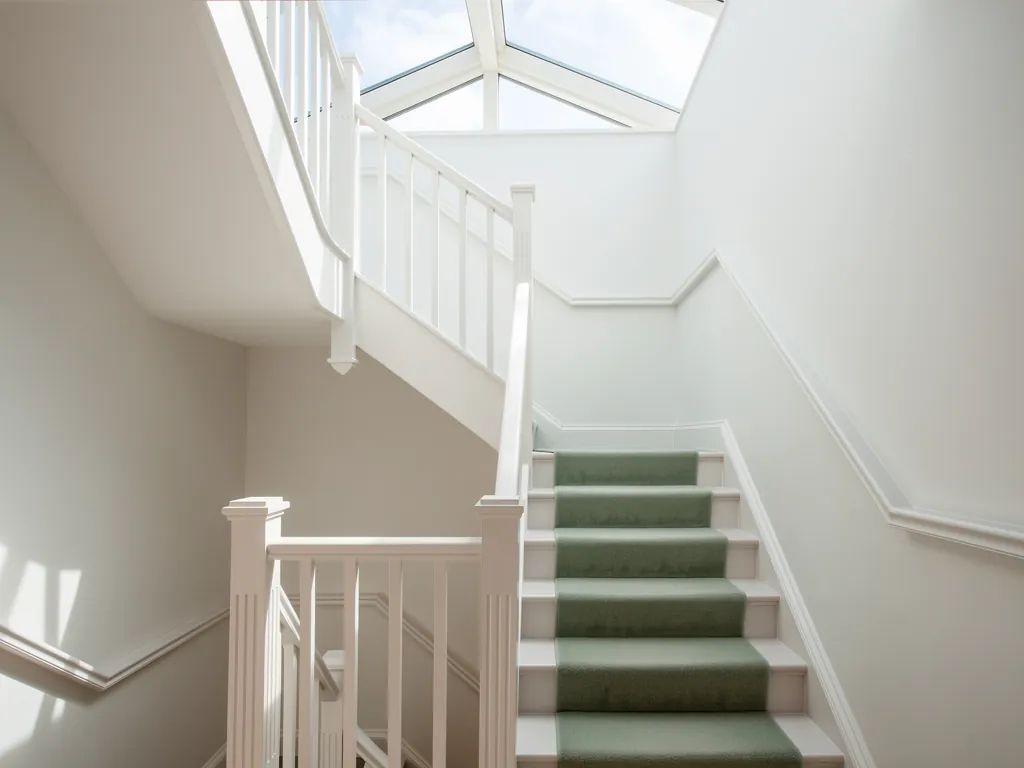
  • Stairwell Directly above the well, not off to one side.
  • A second opening low down A window or door below lets the air in as the warm air leaves.

Put the opening where it helps. In a kitchen extension the best spot is near the cooking end, where steam and heat build. In a loft bedroom it is the highest part of the sloping ceiling. In a stairwell it is directly above the well, not off to one side. The page on electric rooflights for stairwells and landings sets out why height is so useful there, and electric rooflights over a kitchen extension covers the room that comes up first at a survey.

Insects are worth a mention. An open rooflight invites them, especially in a summer evening with the lights on. Insect screens are available on a range of products, and the answer on whether electric rooflights come with insect screens explains which ones. Blinds are a related question, because a blind keeps the sun off the glass and cuts the heat it adds. The page on fitting a blind to an electric rooflight sets out how a blind and an opening pane can share a frame.

NextLetting the air in without letting the noise in

Air without noise

Letting the air in without letting the noise in

A closed opening rooflight can be as quiet as a fixed one, but an open one lets in whatever is outside.

A closed opening rooflight can be as quiet as a fixed one. An open one is an open window in the roof, and it lets in what is outside. The job is to decide which mode the room needs, and at what time of day.

Begin with the closed pane. An opening sash is a moving part, so it carries a seal that a fixed pane does not. That seal, the glazing build and the weight of the sash all affect what you hear in a downpour or as an aircraft passes. The answer to do opening rooflights let in more noise than fixed ones explains the difference in plain words, and the answer is that a well-made, well-fitted opening unit with laminated acoustic glass and good seals sits close to a fixed one. It is the detail that decides, not the label. The page on can an electric rooflight have acoustic laminated glass covers the build, which adds weight to the sash and therefore needs a motor that can lift it.

Next, the noise from the motor itself. A chain or spindle actuator hums while it moves, and it moves for under a minute. It is not a sound you live with. The answer to are electric rooflights noisy when they open and close covers what you will hear, and where the noise comes from if a unit is louder than it should be. A smooth, slow motor on a well-aligned sash is quiet. A strained one is not, which is why the motor is matched to the glass, not picked from a shelf.

What an open pane lets in

  • AircraftGatwick sits inside the borough, and the Local Plan treats the land towards it as heavily constrained by aircraft noise.
  • RoadThe M23 and A23 carry traffic through the night.
  • RailThe Brighton main line and the Three Bridges junction are close to several neighbourhoods.
  • RainA pane slightly open in a shower can tap on the frame, so a rain sensor that closes it early helps.

Then the open pane. Crawley is a town that knows about this. Gatwick sits inside the borough, and the Local Plan itself treats the land between the town and the airport as heavily constrained by aircraft noise. The M23 and A23 carry traffic through the night, and the Brighton main line and the Three Bridges junction are close to several neighbourhoods. If a bedroom faces one of those, opening the rooflight at night is a real decision. We raise it at the survey and write it in the quiet spec, so you choose with the facts.

There are ways to help. Position the opening on the side of the roof that faces away from the noise source. Use a hinged pane whose lifted edge shields the gap from the direction of the sound. Open the pane a little, not fully, which reduces the noise and keeps the airflow. Or use the rooflight for ventilation in the day and for cooling in the evening, before the flights settle, and close it for sleep. The page on night ventilation through an opening rooflight without the noise goes through those choices room by room.

Rain on an open pane is a different sound again. A pane that is slightly open in a shower can tap on the frame, and a rain sensor that closes the pane early saves both the carpet and the noise. On the closed glass, heavy rain is a matter of the glazing build, and our energy efficient rooflights page explains how the same build that keeps heat in also softens the patter.

NextSafety, children and escape routes

Safety and escape

Safety, children and escape routes

A motor that moves a heavy pane needs safeguards, and both the safeguards and the escape question are settled at the design stage.

A motor that moves a heavy pane needs safeguards, and an opening in a roof needs thought where children live. Both are solved at the design stage.

Start with trapping. Electric actuators are built with force limits, so that the pane stops if it meets resistance. A second safeguard is the opening angle and the speed: slow, limited travel keeps fingers out of harm's way. Where a rooflight opens over a room that children use, the control matters as well. A wall switch at adult height, a keypad or a remote kept out of reach puts the decision with an adult. The page on whether an opening rooflight is safe in a house with young children covers the detail.

Then the fall. Approved Document K covers protection against falling, and a sliding rooflight that gives access to a roof terrace sits in the same world as a terrace door: there has to be a guard at the edge of the terrace, and the threshold has to be safe. A flat roof that people walk on is not just a roof. It is a platform, and the rooflight that opens onto it is part of that safety design.

The rules and cover behind it

  • Approved Document KProtection against fallingApplies where a sliding rooflight gives access to a roof terrace.
  • Approved Document BEscape windows from a loft conversionSets the size and position of an escape window.
  • ten-yearWorkmanship guarantee on the installationIt stands behind the work, beside the manufacturer's own cover.

Escape is a separate question, and the answer is seldom a simple yes. A loft conversion needs an escape route, and where an escape window is part of it, Approved Document B sets out its size and position. A roof window that opens wide enough, at the right height above the floor, can meet that requirement. A flat-roof rooflight generally cannot, and a hatch is designed for access, not escape. The page on whether an opening rooflight can be used as a fire escape covers the conditions, and any rooflight that is meant to carry that duty is agreed with Building Control before it is ordered.

It is also worth remembering that an electric escape window has to work when the power does not. A release that operates by hand is part of any design that has a safety duty.

  • Fixing the power supply is an electrical task, by a qualified electrician, to current regulations.
  • Putting a rooflight in a new opening needs Building Regulations compliance for structure, insulation and ventilation.
  • Where the work is notifiable, we handle the Building Control notification.

Our guarantee page explains the ten-year workmanship guarantee that stands behind the installation.

NextSizes, upstands and the roof around the opening

The roof around it

Sizes, upstands and the roof around the opening

An opening rooflight needs more roof detail than a fixed one, and the survey checks each point.

An opening rooflight needs more roof detail than a fixed one. The upstand, the fall of the roof and the space for the sash to swing all affect how it performs, and how quietly.

A flat roof is never perfectly level. It needs a fall so that water runs off, and current guidance points to a fall of 1:80 as a minimum finished result. A rooflight on a kerb interrupts that flow, so the roof is built to carry the water around it. The upstand, the vertical face of the kerb above the finished roof, is usually set at a minimum of 150mm for water to stay out. A hinged rooflight that opens wide can need more, because a rain splash on the opened pane should not reach the gap. The answer to does an opening rooflight need a taller upstand covers the detail.

Size is a second question. An opening pane weighs what the glass weighs, and a large acoustic laminated unit is heavy. The bigger the pane, the stronger the hinges, the stronger the motor and the stronger the kerb that carries them. Sliding units hide their weight in the rails, which is why the size answer for them is different. The roof must also take the load. If the rooflight replaces a section of joists, the opening needs trimming with a header, and a structural engineer or the extension builder confirms that. We work to their detail.

Swing space is often forgotten. A hinged pane lifts, so whatever is next to it on the roof, a parapet, a wall, a chimney, a neighbouring rooflight, has to stay clear. On a pitched roof a centre-pivot window turns on its axis, and the space inside the room has to stay clear too, including the blind and its box.

A table sets out the main checks we make at the survey:

Roof fall

Why it matters
Water must clear the kerb
What we record
Fall and direction

Upstand height

Why it matters
Keeps splash away from the gap
What we record
Height for the chosen unit

Swing clearance

Why it matters
The pane must lift freely
What we record
Nearest obstruction

Cable route

Why it matters
Power reaches the motor tidily
What we record
Route and switch position

Noise side

Why it matters
Decides which way the gap faces
What we record
What we hear, and from where
CheckWhy it mattersWhat we record
Roof fallWater must clear the kerbFall and direction
Upstand heightKeeps splash away from the gapHeight for the chosen unit
Swing clearanceThe pane must lift freelyNearest obstruction
Cable routePower reaches the motor tidilyRoute and switch position
Noise sideDecides which way the gap facesWhat we hear, and from where

The opening itself can be a new one, cut into a roof that has never had glass, or an existing one, reused. The page on whether a fixed rooflight can be swapped for one that opens explains when the kerb can stay and when it has to change.

NextHow a fitting runs in a lived-in house

On the day

How a fitting runs in a lived-in house

The survey, the product choice and the cable route take the time, and the day on the roof is the quick part.

An electric rooflight fitting is a short job with a longer lead-up. The survey, the product choice and the cable route take the time. The day on the roof is the quick part.

The sequence follows the order in which decisions become hard to reverse. First the survey: we look at the roof, the room, the cable route and the noise. Then the quote, with the quiet spec attached. Then the order, because made-to-measure units take time, and the kerb and the motor are matched to the glass. On the day, the roof is opened, the kerb set, the rooflight fitted and weathered, and the roof covering brought back to it. Inside, the lining is made good, the cable is run, and the switch is fitted. The last step is the one that matters to you: the pane is tested through a full open and close, the sensor is wetted with a spray bottle to show it works, and the settings are explained.

A few details keep the job calm. The roof is covered at the end of each day, so a shower overnight does not reach the room. Dust sheets go down inside, and the ceiling opening is kept as small as the job allows. The power is isolated while the electrician works, and the household is told when. Where a scaffold or a tower is needed to reach a high roof, it is arranged in advance. If the project involves a new extension, we fit the rooflight at the point in the build that suits the roofer and the electrician, not after the plaster is dry.

From survey to handover

  1. 01SurveyWe look at the roof, the room, the cable route and the noise.
  2. 02QuoteThe quote comes with the quiet spec attached.
  3. 03OrderMade-to-measure units take time, and the kerb and motor are matched to the glass.
  4. 04The day on the roofThe roof is opened, the kerb set, the rooflight fitted and weathered, and the covering brought back to it.
  5. 05InsideThe lining is made good, the cable is run and the switch is fitted.
  6. 06TestingThe pane runs through a full open and close, the sensor is wetted to show it works, and the settings are explained.

Timing also depends on the product. A standard hinged unit is quicker than a large sliding one, which arrives in sections, needs lifting equipment and sometimes a crane. The rooflight that is replacing an existing one is faster again, since the opening and the kerb are already there. For the question of cost, which depends on all of this, see the page on what affects the cost of an electric rooflight and our wider rooflight and skylight costs guide.

Planning is a question of the roof, not the motor. A rooflight on a rear flat roof is commonly permitted development, with limits on how far it projects. A front roof slope, a terrace, or a house in a conservation area changes the answer. The position is checked for the address. For Crawley, there are thirteen conservation areas, and homes in them need a closer look, which our conservation rooflight installation page covers. The Planning Portal is the official place to start for permitted development rules at planningportal.co.uk.

NextReplacing a rooflight that no longer opens, or never did

Replacement

Replacing a rooflight that no longer opens, or never did

A stuck rooflight and a fixed one you wish opened are both replacement jobs, and both can be done neatly.

People come to us with a rooflight that is stuck, or a fixed one that they wish opened. Both are replacement jobs, and both can be done neatly.

A sash that no longer opens may have a worn hinge, a failed seal or a motor that has come to the end of its life. A rooflight that has lost its seal might be misted as well, and for those our misted and failed rooflight replacement page is the place to start. The better-value route is often to renew the whole unit, since a new sash in an old frame means matching a product that may no longer be made. A fresh unit brings a current glazing build, a fresh seal and a motor with a known life. The page on how long an electric rooflight motor lasts explains what to expect.

A fixed rooflight that you wish opened is the other case. Sometimes the kerb and the frame can stay, and only the glazed part changes. More often the unit is replaced, because the sash, the hinges and the motor have to work together. If the glass is in good order and the frame is stock, there may be a route to fit a hinged sash and a motor within the existing opening. The page on converting a fixed rooflight to an opening one sets the options out.

Whichever route, we survey first, look at what you have and say what it will take. A conversion is confirmed only once we have seen the kerb.

For houses with a VELUX roof window already in place, the VELUX window installation page covers that range, including electric and solar versions. A roof lantern, which does not open in the same way, has its own page at roof lantern installation. For a dark landing or bathroom where you need light and have no space for an opening, a sun tunnel is sometimes the better answer.

NextCaring for the motor, the seals and the glass

Looking after it

Caring for the motor, the seals and the glass

A little regular attention keeps an electric rooflight quiet and smooth.

An electric rooflight is low maintenance, and a little regular attention keeps it quiet and smooth. Clean the glass, keep the tracks clear and run the pane through a cycle now and then.

The glass cleans like any window, from inside with a soft cloth and from outside with a long-handled brush or a water-fed pole where the roof allows. Self-cleaning coatings exist and help, though they do not remove the need altogether. Seals, the rubber strips around the sash, benefit from a wipe and, now and then, a light silicone treatment, which keeps them supple. Tracks on a sliding unit collect leaves and grit, and a soft brush clears them. The page on looking after an electric rooflight: cleaning and care covers the routine.

The rain sensor needs a clean plate, because dust and pollen dull its response. The roof around the rooflight needs the gutters and the outlet kept clear, so that water leaves as designed. Ask us about the settings when the rooflight is handed over, and keep the paperwork that comes with the quote, including the quiet spec. It records what was fitted and why.

What to keep an eye on

  • The glass Clean from inside with a soft cloth, and from outside with a long-handled brush or water-fed pole.
  • The seals A wipe, and now and then a light silicone treatment, keeps them supple.
  • Sliding tracks They collect leaves and grit, and a soft brush clears them.
  • The rain sensor plate Dust and pollen dull its response, so keep it clean.
  • Gutters and outlet Kept clear, so water leaves the roof as designed.

A motor lasts for years, and the exact span depends on the unit. The life of an actuator depends on the product, the sash weight, the number of cycles and the climate. Heavier acoustic glass places more load on a motor than plain double glazing, which is why the motor is chosen for the glass. Good habits help. Do not force a stuck pane by hand, do not leave the pane open in a gale and keep the travel clear.

The ten-year workmanship guarantee covers our installation. It sits beside the manufacturer's own cover for the product, and both are described when you receive the quote. For the terms, see the guarantee page.

NextChoosing the room first, the rooflight second

Room first

Choosing the room first, the rooflight second

The best electric rooflight is the one chosen for its room, and Crawley's New Town neighbourhoods are full of the same four rooms.

The best electric rooflight is the one chosen for its room. Four rooms come up again and again, and each has a different answer.

A loft bedroom, often a 1950s or 1960s house with a dormer or a rooflight in the sloping ceiling, wants a roof window with a good seal and a quiet motor. It is the room that hears early flights and late arrivals, so the glazing build is the first decision, and the night-time opening habits are the second. A kitchen extension wants a hinged or sliding rooflight over the cooking and eating space, with a rain sensor, since the kitchen is where a window is easily left open and forgotten. A stairwell wants height and reach, which is where a motor earns its keep. A home office wants ventilation without distraction, which suggests a controlled, slow opening and a closed pane for calls.

Crawley's homes give these rooms a familiar shape. The New Town neighbourhoods, from West Green in 1949 to Maidenbower in 1987 and Forge Wood from 2014, are full of semis and terraces where the loft was converted or the back was extended. The Victorian terraces of northern Southgate, the concrete houses of Northgate and the terraces and flats of Bewbush each pose a slightly different roof question, and the survey finds the right answer for each.

Neighbourhoods and their roofs

  1. 1949West GreenOne of the first New Town neighbourhoods, full of semis and terraces with converted lofts.
  2. 1987MaidenbowerA later neighbourhood where the back of the house is often extended.
  3. 2014Forge WoodThe newest of the neighbourhoods named here.

Beyond the town, the same four rooms appear across the 30 miles we cover, from Horsham and Haywards Heath to Reigate and East Grinstead. If you already know which room you have in mind, the get a quote page takes the details, or you can message us on WhatsApp or write to info@clearskylightscrawley.co.uk. The form on this page, get a quote, reaches the same place.

NextQuestions about electric and opening rooflights in Crawley homes

Common questions

Questions about electric and opening rooflights in Crawley homes

Short answers to what people ask at a survey, with longer versions on the pages linked above.

These answers cover what people ask at a survey, in a few plain lines each. Longer versions sit on the pages linked above.

Will an electric rooflight leak if the motor fails?

No. A closed rooflight is sealed by its gaskets and its kerb detail, and the motor only moves the pane. If the motor stops, the pane stays where it is. A manual release, or a backup, lets you close it. The page on electric rooflights in a power cut has the detail.

Can I open the rooflight for air and still keep the noise out?

To a degree. An open pane lets in what is outside, so the answer is to open it on the quiet side, open it partway, or use it at the hours when the street is calm. A closed pane with laminated acoustic glass and good seals is the quiet mode. See night ventilation without the noise.

Do I need a rain sensor?

If anyone leaves the house with the pane open, yes. It is a small addition that closes the window before rain reaches the floor. It is optional on a rooflight you always close by hand.

Is an opening rooflight warmer or colder than a fixed one?

A good one is close. The sash adds a seal, and the glazing build and frame decide the heat loss. We specify the glass for the room, as set out on our energy efficient rooflights page.

How do I start?

Send the room and the roof type through the quote form, and we arrange a survey. The quote arrives with the quiet spec for your room. The contact page lists every way to reach us.

Guides and answers on electric and opening rooflights

Written for homeowners around Crawley: the plain answer first, then the detail.

All guides All answers

Get a quote

Tell us about the room

  • No obligation
  • Quiet spec included
  • 10-year guarantee

Prefer to message? WhatsApp us or call 01293 974093, or email info@clearskylightscrawley.co.uk.