Surrey · 5.2 miles from Crawley by road

Rooflights and skylights in Charlwood

Charlwood sits beside Gatwick, so every rooflight here is chosen for light and for sound. We check Mole Valley's planning position for your address and write the quiet spec first.

Get a quote What is a quiet spec?

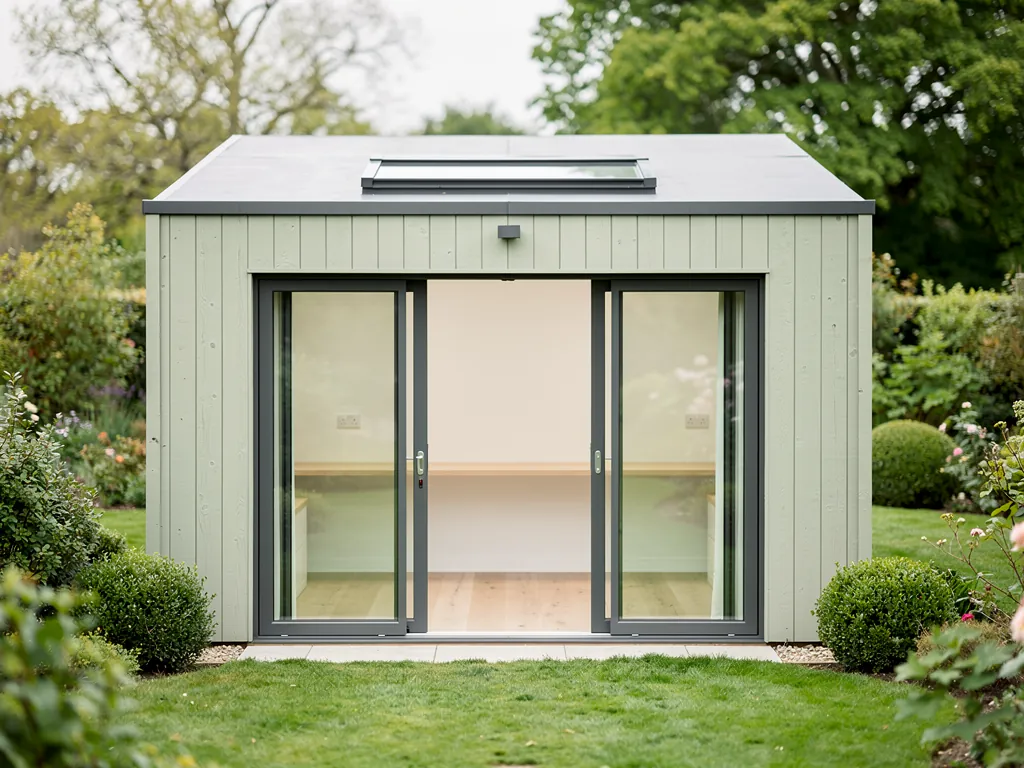
A timber-clad garden office with a rooflight in its roof
Planning
Mole Valley District Council, with Surrey County Council above it
Homes
Detached houses are the largest type, 379 of 911 households in 2011
Roofs
Checked on the day at survey, with stone near the western ridge
Setting
North-west of Gatwick, in the parish's greatest aircraft noise exposure

Aircraft overhead, old stone and a roof that has to stay quiet

  • Gatwick close by

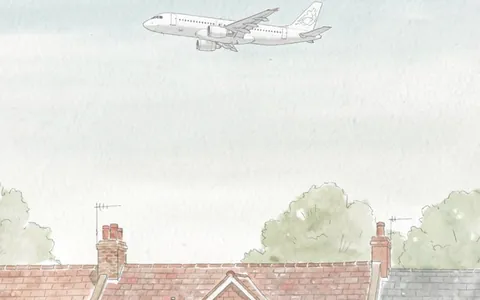
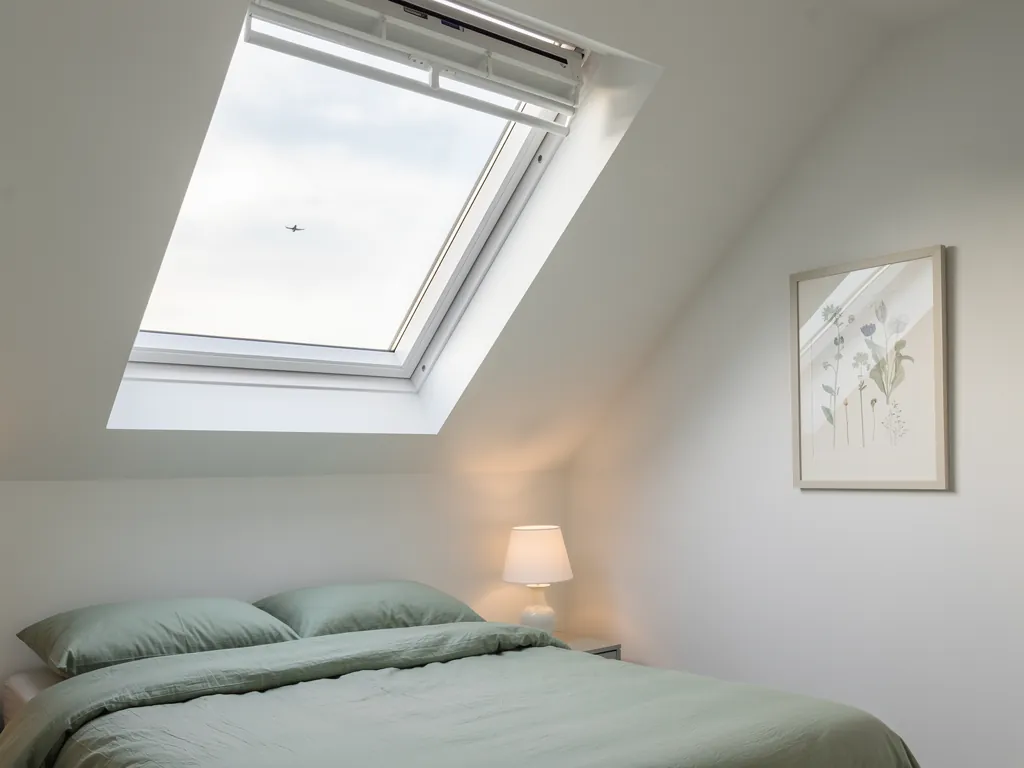
    The parish council says Charlwood and Hookwood are the most exposed residential areas to airport noise, so a loft bedroom hears the sky first.

  • A conservation area to respect

    The village has its own conservation area from 1974, so position, size and frame on a visible slope are checked with Mole Valley for the address.

  • Old roof windows letting noise in

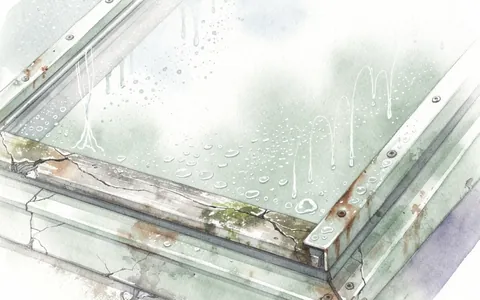
    Units from earlier loft work can mist or close loosely, admitting cold air and aircraft sound together until they are replaced.

  • Rain on glass in extensions

    A kitchen lantern or flat pane rings under a downpour unless the outer sheet, inner pane and upstand are chosen together.

Quiet spec for a bedroom under the Gatwick departures

Below, a written spec as it might read for a detached village house close to the airport. Every quote arrives with a spec of this kind, written around the survey of your own room.

Room:
attic bedroom, detached house in Charlwood, rear slope away from the street
What we would listen for:
first departures of the morning through a shut window, plus rain
Glazing:
laminated acoustic inner sheet, mismatched pane thicknesses, deepest cavity the frame allows
Seals and upstand:
unbroken compressed gaskets, flashing matched to whatever roof covering we find, insulated lined upstand

Noise out hereStill in here

The survey file

Rooflights in Charlwood

Charlwood sits on the north-west side of Gatwick, and the airport is the first thing to settle before any glazing is chosen. A rooflight installation in Charlwood is a decision about light and a decision about sound, made together. This page walks through the parish as the record describes it: its planning authority, its conservation area, its detached houses, its flight paths and its rain. Where a fact matters to a roof, we say what we would do about it.

Surrey, not Sussex

A parish in Surrey, planned by Mole Valley

Charlwood feels close to Crawley, but its rooflight rules come from Mole Valley, so the position is worked out for each address.

Charlwood is a village and civil parish in the Mole Valley district of Surrey. Planning decisions for a rooflight here belong to Mole Valley District Council, and Surrey County Council sits above it for local services.

That sounds like a small detail, and it matters. Crawley is 5.2 road miles away, close enough that the postcode and the shopping trips point one way while the council points another. The parish is in Surrey, not in Crawley Borough and not in West Sussex. The 1974 Charlwood and Horley Act settled that question, and the parish stayed in Surrey rather than transferring to West Sussex. So a rooflight at a Charlwood address is judged against Mole Valley's rules and Mole Valley's conservation policy, however near Crawley it feels.

Our area is Crawley and thirty miles around it, so the county line is ordinary ground for us. The practical effect is on paperwork. Whatever planning position applies is worked out for your address with the right authority, before a quote is finalised. Building Regulations apply to the work wherever it sits, and we handle the Building Control notification where the work is notifiable. Our page on Building Regulations for rooflights sets out what those rules ask of a new opening, and the guide to planning permission for rooflights and skylights explains the separate planning question.

Who decides what in Charlwood

  • Mole Valley District CouncilJudges planning for a rooflight at a Charlwood address.
  • The 1974 ActThe Charlwood and Horley Act kept the parish in Surrey rather than West Sussex.
  • Distance from Crawley5.2 road miles, close enough that the postcode and the council point different ways.
  • Building RegulationsThey apply wherever the work sits, and we handle the notification where it is notifiable.

One useful habit is to ask the council early. A short written question to Mole Valley about a particular roof slope takes little time, and it can save a redesign later.
NextDetached houses and the roofs that go with them

Choosing the slope

Detached houses and the roofs that go with them

Detached houses have slopes on every side, so the survey is mostly about which slope should take the rooflight.

The 2011 Census recorded 2,337 residents in 911 households across the parish. Of those homes, 379 were detached houses, and detached was the largest single type.

That count says something useful about the job. A detached house has roof slopes on every side, with no party wall to share and no neighbour's roof butting against it. Each slope can, in principle, hold a rooflight, and each slope faces its own direction. A survey in a detached house is therefore about choosing which slope, because there is usually more than one to choose from.

We would start in the loft with a tape, a torch and a spirit level. The things we look for are the same in any house, whatever its age:

  • the rafter size and spacing, and whether any have been cut before;
  • the position of purlins, hips and chimney stacks, which decide where an opening can go;
  • the pitch, which decides whether a roof window or a flatter rooflight is the right product;
  • the insulation already in the roof, and how the new opening will be lined and sealed into it.

The parish at the 2011 Census

  • 2,337Residents across the parishCounted at the 2011 Census.
  • 911HouseholdsThe homes those residents lived in.
  • 379Detached housesThe largest single type of home.

The research record for Charlwood gives no roof material and no dominant building era, so we assume neither. Tile, slate or something older is found on the day, at the survey, and the flashing kit is chosen to match what is actually there. A mismatched kit is a quick way for a good rooflight to end up with a poor edge, so we read the roof before we order anything.

A big detached house may have room for a loft bedroom or a study under the roof. The guide to choosing a rooflight and the one on sizing a rooflight for a room are the two best places to start, because they turn the loft into a short list of workable openings.

NextCharlwood and Hookwood, closest to the runway

Under the flight path

Charlwood and Hookwood, closest to the runway

The roof did quiet work before the glass arrived, so the build of the glazing matters more here than in a sheltered lane.

Charlwood Parish Council states that Charlwood and Hookwood have the largest area of exposure to the borders of Gatwick Airport. It goes on to say that they suffer the greatest levels of aircraft noise among residential communities.

That is the parish's own description of itself, and it is the reason this page takes the shape it does. For a loft bedroom, the sky is the noisiest neighbour. A rooflight puts a pane of glass where the roof used to be, and the roof was doing quiet work. Tile, battens, felt, insulation and plasterboard together absorb and block a great deal of sound. A single thin pane does much less of the same.

So the glazing build matters more here than it would in a sheltered lane. We would specify a laminated acoustic inner pane, made of two sheets of glass bonded around a soft interlayer. The interlayer damps the vibration that carries sound through a plain pane. We would also choose panes of unequal thickness, because two panes of the same thickness ring at the same pitch and pass sound more readily. The cavity between them should be as wide as the frame allows.

The quiet build, outside to room

  1. 1Panes of unequal thickness Two panes of the same thickness ring at the same pitch and pass sound more readily.
  2. 2Widest cavity the frame allows More air between the panes for sound to cross.
  3. 3Laminated acoustic inner pane Two sheets bonded around a soft interlayer that damps vibration.
  4. 4Continuous compressed gaskets They close the gaps that glass alone cannot close.
  5. 5A well formed upstand Seals the edge so sound has no route round the glass.

The seals are the second half of the answer. A rooflight can have good glass and still admit noise round its edge, through a gasket that has hardened or a flashing that does not sit tight. Continuous compressed gaskets and a well-formed upstand close the gaps that glass alone cannot close.

Quiet is described here by the build, never by a figure, because a figure without a measured room behind it means very little. That description goes in the written quiet spec that comes with every quote. The full guide to rooflights under the Gatwick flight paths goes further, and acoustic laminated glass explained covers the glass itself.

NextWind direction, 06:00 departures and the loft you sleep in

The early start

Wind direction, 06:00 departures and the loft you sleep in

Departures arrive in waves, the first one early, and the direction changes with the wind on the day.

Gatwick publishes the pattern of its departures. It has about 400 departures a day in summer and about 300 in winter, mostly between 06:00 and 23:30. Aircraft take off and land into the wind, so the direction of departure depends on the wind on the day.

Three things follow for a bedroom under a rooflight.

First, the noise is not constant. It arrives in waves across the day, and the first wave starts early. Anyone who sleeps under the roof is the most exposed person in the house to that 06:00 start, because the loft has the least between the bed and the sky.

Gatwick's published pattern

  • 400Departures a day in summerAbout this many, mostly through the day.
  • 300Departures a day in winterAbout this many.
  • 06:00Start of the first waveDepartures run mostly from this time.
  • 23:30End of the main windowMostly before this time at night.

Second, the noise changes with the wind. On a day when aircraft leave in one direction, a parish close to the airport hears one pattern. On a day with the opposite wind, it hears another. Because of that, a single afternoon's listening at a survey does not tell the whole story, so we ask what you hear across the week. You know your house better than any survey visit can.

Third, the answer is the same on every wind. A properly built rooflight treats the roof as a barrier and not as a hole. That means acoustic glass, seals that stay tight and an upstand that is insulated and lined. We write each of those into the spec so that the quiet is part of the order and not an afterthought.

For a wider view of how a written specification is built, read what goes into a quiet rooflight specification. The quiet spec page shows the layout you will receive.

NextThe conservation area round St Nicholas

Village centre rules

The conservation area round St Nicholas

Check whether the house sits inside the boundary first, then design the rooflight, then write the quiet spec around it.

Charlwood has its own conservation area, designated by Mole Valley District Council on 26 March 1974. Mole Valley has 26 conservation areas in total, so this is one of a set the council manages under shared policy.

At the heart of Charlwood stands the Church of St Nicholas, which is Grade I listed. The record gives it Norman-era stonework and wall paintings dated to about 1300. That is very old fabric by any measure, and it sets the tone for the village centre. A conservation area exists to protect the character of places like this.

Whether your own house lies inside the boundary is a matter for the council's map, not for a guess. Conservation status is checked for the address. If the house is inside the area, the rooflight question gets more careful: position, size, the type of frame and how the glass sits in the slope all become part of what the council can consider. A flush, low-profile conservation rooflight with a slim frame is the usual direction of travel on a visible slope. Our hub on conservation rooflight installation describes those units in detail.

The safest order of work

  1. 01Find out the positionCheck the council's map for the address rather than guessing.
  2. 02Settle the designA flush, slim framed unit is the usual direction on a visible slope.
  3. 03Write the quiet specBuild it around the final product, not the other way round.

If the house stands outside the boundary, the planning route may be simpler, and the question becomes whether the work falls within permitted development. Again, that depends on the roof slope, the building's own history and any conditions attached to it. The council decides, and we check before we commit.

The safest order is this: find out the position, settle the design that fits it, then write the quiet spec around the final product. Doing the noise work first and the planning work second can leave you with a specification for a rooflight that cannot be built.

NextSussex Marble, old stone and the walls under the roof

Stone and sound

Sussex Marble, old stone and the walls under the roof

Stone near the roof limits where an opening can go, and heavy walls can leave the rooflight as the weakest link for sound.

A narrow ridge of Sussex Marble runs through the west of the parish. It is a local stone, and it is a reminder that some houses here carry stone in their walls or their detail.

For a rooflight, stone matters in two ways. The first is where it is used. Where a house has stone walls or stone detail near the roof, an opening near the eaves or gable has to respect it. Stone cannot be trimmed back like timber, and a flashing has to sit against it without chasing into it more than necessary.

The second is sound. Solid walls and thick masonry absorb sound well, which can make the roof the weakest link between a loft room and the outdoors. In a house with heavy walls, the rooflight may be the one place where sound gets through. That is a good reason to give the roof glazing the same attention the walls got from the original builders.

Two ways stone matters

  • Where it is usedStone cannot be trimmed back like timber, so an opening near the eaves or gable has to respect it.
  • The flashingIt has to sit against the stone without chasing into it more than necessary.
  • How sound travelsThick masonry absorbs sound well, so the roof glazing gets the same attention the walls got.

One rule applies to all old fabric. We look before we cut, and the opening is sized to the structure that is really there. On a roof with stone at the gable, that may mean keeping the opening clear of the wall head and using a kit designed for the tile or slate beside it.

A sympathetic rooflight on an older roof is a modest piece of glass set level with the roof plane. Our guide on where to position a skylight in a room helps with the choice of slope, and the page on rooflight or skylight explains why the two words describe the same product.

NextWhich rooflight suits which Charlwood room

Room by room

Which rooflight suits which Charlwood room

Different rooms ask different things of a roof opening, and the table is a starting point for the survey.

Different rooms ask different things of a roof opening. The table below matches common situations to a product type. It is a starting point for the survey and not a substitute for it.

Loft bedroom

Likely product
Roof window, laminated inner pane
Quiet priority
Aircraft, early start

Kitchen extension

Likely product
Flat rooflight or lantern
Quiet priority
Rain on the outer pane

Home office

Likely product
Opening rooflight, electric
Quiet priority
Steady calls, ventilation
Hub
Opening units

Landing or hall

Likely product
Sun tunnel
Quiet priority
Light first, sound second
Hub
Sun tunnels
RoomLikely productQuiet priorityHub
Loft bedroomRoof window, laminated inner paneAircraft, early startRoof windows
Kitchen extensionFlat rooflight or lanternRain on the outer paneLanterns
Home officeOpening rooflight, electricSteady calls, ventilationOpening units
Landing or hallSun tunnelLight first, sound secondSun tunnels

A house in the parish might want one of these rooms treated or all four, and the glazing build changes from row to row.

A loft bedroom asks for the most. It is the room where you want the dark and the quiet at the same time, and where the roof is nearest your head. A kitchen lantern asks for something different. Rain on glass makes its own noise, and a lantern has a lot of glass to ring. A thicker outer sheet, a laminated inner and a properly dressed upstand bring that down. Our guide on reducing rain noise under a flat rooflight goes through the options in order.

A home office sits in between. You want daylight on the screen without glare, fresh air when the room warms up and a quiet line for calls. An opening rooflight with a motor does the first two, and the glazing build does the third.

A sun tunnel is the modest answer to a dark landing. It borrows light down a tube through the roof space and gives a soft circle of daylight. Because the glass area is small, it is seldom the noisy part of a house.

NextReplacing the rooflights a house already has

Tired units

Replacing the rooflights a house already has

A unit that is tired lets in cold, damp and noise together, and a replacement can improve all three.

A house in the parish may already hold roof windows or rooflights from earlier alterations. They are worth a look, because a unit that is tired lets in cold, damp and noise together.

The signs are plain. Mist or condensation between the panes means the sealed unit has failed. A frame that no longer closes tight points to worn seals or a shifted sash. Staining on the reveal suggests moisture getting where it should not. Our guide to the signs a rooflight has failed lists them in order, and the page on when to replace a rooflight helps you weigh the timing.

When we replace a unit, we upgrade what the old one did. A new roof window can carry a laminated acoustic inner pane and modern seals, so the room is quieter than before and warmer too. The frame is fitted into the existing opening where it suits, and the flashing is renewed to match the roof. If the old unit was the wrong size for the room, this is the moment to change that as well.

Signs a unit is tired

  • Mist between the panes Condensation inside means the sealed unit has failed.
  • A frame that no longer closes tight Points to worn seals or a shifted sash.
  • Staining on the reveal Suggests moisture getting where it should not.

The choice between a like-for-like swap and a better unit is worth a short conversation. The guide on replacing an old skylight sets out both routes. Our service page on misted and failed rooflight replacement describes how the job runs.

Whatever we fit, it is installed to current Building Regulations. That includes the thermal performance of the new glass, the ventilation of the room and the safe fixing of the unit to the structure. The 10-year workmanship guarantee covers the installation, and you can read its terms on the guarantee page.

NextQuestions from Charlwood, Hookwood and the airport side

Airport side questions

Questions from Charlwood, Hookwood and the airport side

Questions that come up naturally in a parish this close to the runway, answered from the record and general practice.

These are the questions that come up naturally in a parish this close to the runway. The answers draw on what the record says and on general practice.

Will a rooflight make my loft bedroom noisier when planes go over?

A plain, thin pane would let more sound in than the tiled roof it replaced. A laminated acoustic inner pane, unequal pane thicknesses, a wide cavity and tight seals bring the sound of the room back toward what the roof gave you. We write the build into the quiet spec so you can see it before you agree.

Does my house need planning permission?

That depends on the roof slope, the building and whether it is inside the conservation area. Mole Valley District Council is the planning authority. We check the position for your address and tell you what the route is before we price the work.

Can a rooflight go in a house with a lot of character?

Yes, with care. We look at the structure before we cut, size the opening to the timbers and choose a slim-framed unit that sits low in the slope. On a visible face in the conservation area, that low profile is usually what makes a design acceptable.

Which way will the noise come from on a given day?

That depends on the wind. Gatwick aircraft take off and land into the wind, so the departure direction changes. We therefore ask what you hear across the week, and we build the glazing to suit the room and not a single afternoon.

When you are ready, get a quote and tell us which room you have in mind, or message us on WhatsApp. Nearby, our pages for Horley and Rusper cover the neighbouring villages on the same side of the airport, and the main Crawley page covers the wider area.

Get a quote

Tell us about the room

  • No obligation
  • Quiet spec included
  • 10-year guarantee

Prefer to message? WhatsApp us or call 01293 974093, or email info@clearskylightscrawley.co.uk.