A rooflight rarely fails in one afternoon. It gives notice first, in small ways that are easy to put down to the weather: a grey film inside the glass on a cold morning, a cool breath at the edge of the frame, a faint brown ring on the ceiling, a room that sounds different in the rain. Each of these signs of a failed rooflight points at a different part of the unit, and reading them properly tells you whether you are looking at a tired seal, a spent glass unit or a problem in the roof around it. This guide goes through the skylight failure signs in the order a surveyor meets them: the glass, the frame, the plaster, the sound and the structure, and then what the pattern adds up to.
Mist between the panes is a sealed unit that has given up
A sealed glass unit is two or three sheets of glass held apart by a spacer, with the gap closed at the edge. When that edge seal fails, the gap breathes, and moisture gets in that cannot get out again.
The first sign is usually cloudiness that appears on a cold, damp morning and thins out by the afternoon. Later it stays, and a pale, dusty film settles on the inside faces of the glass. You cannot wipe it off, because it is not on any surface you can reach. It is between the panes.
That is the clearest of all the signs, and it is worth telling apart from ordinary surface condensation, which forms on the room side of the glass and wipes away. Misting inside the unit means the seal is open and the gas fill that once sat in the cavity has drained away with it. A unit in that state insulates less than it did, even though it still keeps the rain out. Mist also grows with time. A corner at first, then an edge, then a band across the top of the pane.
Some people live with a misted rooflight for years, because it still works as a roof covering. The cost is that the room below becomes colder, the light turns flat and grey, and the glass looks tired from the garden. A sealed unit cannot be reopened and cleaned, so the fix is to renew the unit or the whole rooflight. Our page on misted and failed rooflight replacement sets out how that work runs.
- Cloudy on cold mornings, clear by afternoon: an early seal failure, sometimes in one corner only.
- A permanent film or droplets between the glass sheets: the seal is open.
- A rainbow sheen or a milky patch: the spacer or its desiccant is saturated.
- Streaks that return a week after cleaning the outside: the cause is inside the unit, not on the glass.
A draught or cold line at the frame
If you can feel cold air near a rooflight on a still day, the gap is not in the glass. It is in the gaskets, the frame joints or the junction between the frame and the kerb.
Try the test on a cold, calm evening. Hold the back of your hand a few centimetres from the frame on each side and along the ceiling reveal. A steady, moving chill at one point means a gap. A general coolness all round the opening, without any movement, can mean the glass or frame has lost insulating value, which points back to the sealed unit.
The rubber or foam gaskets around a rooflight harden and shrink as they age. Sunlight, heat and cold cycles take the spring out of them, and a gasket that once pressed firmly against the glass begins to sit loose. Opening vents suffer more, because the seal is asked to close and open again thousands of times. You may notice the vent no longer clicks home as it used to, or that light shows along a closed edge.
A second place to look is the frame corners. Aluminium and uPVC frames expand and contract with the sun, and the corner joints can open slightly over time. A hairline gap at a mitre is more than cosmetic. It is where wind finds its way in, and where damp air from the room finds its way out into the cold structure.
Draughts also change the feel of a room in a way people describe as noise rather than cold. Wind whistling past a loose gasket, or a faint flutter from a vent that no longer seats, is a sign that the seal has gone. Our guide on when to replace a rooflight explains where draughts sit among the reasons to act.
Stains on the plaster and what the water path says
A stain on the ceiling near a rooflight looks alarming, but its shape and timing carry a good deal of information. Before assuming the worst, note when it appears, how it is shaped and where it sits relative to the opening.
A brown ring that appears after heavy rain and dries out within a day or two suggests water is entering from outside at a specific point. On a flat roof, the usual places are the junction where the membrane meets the upstand, the corners of the kerb and the point where water gathers on the high side. Ponding against a kerb is worth checking too. A roof laid to a fall of 1:80 should shed its water, but if a rooflight sits in the path of the flow and the fall is weak, the water lingers against the upstand and finds any weakness.
A stain that appears after cold nights, with no rain at all, tells a different story. That is condensation forming on a cold surface and running or dripping into the reveal, and it leaves a tide line at the lower edge of the opening. On a roof window in a pitched roof, water that drips from the bottom of the glass and stains the sill board can be this. The cause is usually cold bridging at the frame, or a sealed unit that has lost its insulating value.
Plaster that feels soft or crumbly around the reveal, or paint that blisters in a ring, means the dampness has been there for a while. Dark spots of mould along the reveal tell you the surface is staying cold and wet, which is a ventilation and insulation question as much as a weatherproofing one.
Not every stain is from the rooflight. Pipes, gutters, a cracked tile or an overflowing tank above can all leave a mark nearby, so the surveyor follows the water up before deciding. A stain directly under the kerb points at the rooflight; a stain some distance away, running along a joist, may point elsewhere.
The condensation that means something
A rooflight is a cold surface in a warm room, so some condensation is normal. The signs that matter are its position, its persistence and what it leaves behind.
Normal condensation appears on the room side of the glass on very cold mornings, especially in bathrooms, kitchens and bedrooms, and clears within the hour as the room warms. It does not stain anything and it leaves no residue.
Condensation becomes a sign of failure when it is heavy and daily, when it runs down the reveal and marks the plaster, when it collects at the frame rather than the glass, or when it returns within minutes of being wiped. It may also show as black spotting at the sill or a damp smell at the top of the room. That pattern says the frame or the glass edge is colder than it should be, and it can sit alongside a failing unit or a thin upstand without enough insulation. Our answer on whether rooflights cause condensation explains the ordinary and the worrying versions in more detail.
A louder room than you remember
Sound is the sign that is easiest to miss, because it creeps in. A rooflight that used to be quiet becomes the loudest surface in the room, and the change is easy to blame on the weather or the neighbours.
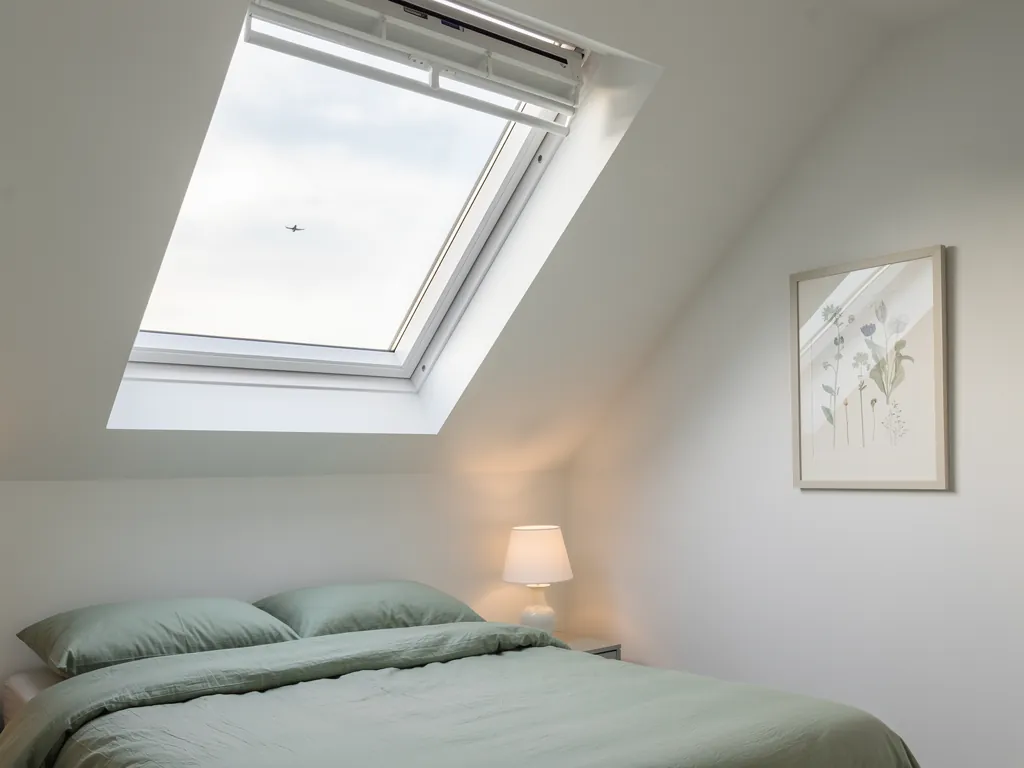
Think about what you hear and when. Rain that used to be a soft hush now has an edge to it. A gust makes a low thrum. Aircraft on the Gatwick routes seem closer than they did. Traffic along a nearby road reaches the bedroom more clearly. None of these prove anything alone, but together they suggest that the seals around the glass have hardened, the glass has loosened in its gaskets, or the unit has lost its seal.
Gaskets do more than keep out the weather. They cushion the glass against the frame, so vibration from rain and wind is absorbed before it reaches the room. As they harden, that cushioning goes, and the glass starts to carry sound like a drum skin. A sealed unit that has lost its gas fill also behaves differently, because the cavity that helped to damp sound is now a moist, leaky space. Some older units were built with thin panes of the same thickness on both sides, which is the arrangement that can ring at certain pitches.
Sound is also the one sign where replacement can be an upgrade and not just a renewal. A new unit can be specified with a laminated acoustic inner pane, a sensible pane thickness and fresh seals, chosen for the noise the room really hears. Our page on acoustic laminated glass covers what those choices involve. Whichever sound it is, we write the answer into the quiet spec that comes with every quote.
Cracks, crazing and sagging glazing
Some failures show in the material itself. They are easier to spot, but they need a careful look to tell harmless from serious.
A crack running across a glass pane is obvious and calls for prompt replacement. A crack that starts at the edge of a pane can come from stress: the frame moving, the kerb settling or the glass pressing against a rigid packer. Toughened glass can also fail without warning and break into small pieces, whereas laminated glass cracks but stays in place, held by its interlayer. That difference is one reason a laminated inner pane is the sensible choice over any room where people stand.
Plastic domes and older polycarbonate rooflights fail differently. They yellow, turn brittle and develop a network of fine surface cracks known as crazing. The light turns dull and amber, the dome feels rough to the touch and a sharp knock can crack it across. A dome that has sagged or bowed inward under its own weight has lost its shape and its seal at the same time.
Look also at the frame and the kerb. Timber kerbs that have gone soft, flaking paint on a timber roof window, corrosion at aluminium joints and a membrane that has lifted away from the upstand all say that the surrounding build is ageing alongside the glass. Replacing the glass alone in those circumstances can leave the real weakness where it was.
What each sign usually points to
Use the table as a first reading, not a diagnosis. Signs overlap, and a survey on site is what settles them.
| What you see | Likely source | Part affected | Next step |
|---|---|---|---|
| Mist between panes | Failed edge seal | Sealed unit | Renew unit or rooflight |
| Moving cold air at frame | Hardened gasket or open joint | Seals, frame | Survey the frame |
| Brown ring after rain | Water at the upstand | Kerb, membrane | Survey roof and kerb |
| Wet reveal after cold nights | Condensation, cold frame | Unit, insulation | Check unit and upstand |
| Louder in rain or wind | Loose or hardened seals | Gaskets, glass | Specify quieter glazing |
| Yellow, crazed dome | Ageing plastic | Whole dome | Replace with glass |
| Cracked pane | Stress or impact | Glass unit | Replace promptly |
Two or three signs at once usually mean the unit is at the end of its working life. A single sign, such as a faint draught on one edge, may be much less serious, and worth watching through one more winter before any decision.
How to look properly before anyone comes out
You can gather a good part of what a surveyor needs with an hour and a torch. The aim is to record what you see so that the picture is complete before anyone climbs onto the roof.
From inside, check the glass in daylight at an angle, to spot cloudiness that is hard to see head on. Look at the reveals for marks and the ceiling around the opening for rings. Feel around the frame on a cold day. Open any vent and close it, and notice whether it seats cleanly. Listen during the next rainstorm, and note whether the sound changed compared with last year.
From outside, where you can reach a ground-level view safely, look at the kerb, the membrane at the upstand and any pooling on the roof surface after rain. Note the roof fall and whether water is slow to clear. Never climb onto a wet or pitched roof to check. A photograph from an upstairs window or a long lens from the garden tells you nearly as much.
- Note the date and the weather when each sign appears.
- Photograph the glass, the frame corners, the reveal and any stain.
- Write down the room, the orientation of the roof and the age of the unit if you know it.
- Send the notes with a request for a quote, or by WhatsApp, so the survey starts with facts.
Replace, upgrade or renew the whole opening
Once the signs point to failure, the question becomes how much to replace. There are three sensible answers, and the signs help choose between them.
If only the sealed unit has failed and the frame, kerb and membrane are sound, a new glass unit in the existing frame can be a reasonable choice. That suits a rooflight that is otherwise in good order and whose frame still closes well. If the gaskets and frame have aged along with the glass, renewing the whole rooflight gives a clean, consistent result, and our page on replacing an old skylight explains when a like-for-like unit makes sense and when a better one is worth choosing. Where the kerb, the upstand or the membrane around the opening has also aged, the work becomes a renewal of the whole opening, with a new upstand built to current standards.
Replacement also brings the work under the Building Regulations. The new glazing must meet current thermal performance requirements under Approved Document L, and good practice asks for safety glazing over places where people stand. Whether a particular job is notifiable depends on what is being done, and our answer on whether replacing a rooflight is notifiable sets that out. Where it is, we handle the Building Control notification.
A replacement is also the moment to think about what the old unit taught you. A room that was cold, bright in the wrong place or loud in the rain has told you what to specify next. That is why we list the choices in writing before the work is booked. If you are weighing the decision, is it worth replacing an old skylight looks at it from the homeowner's side..
Questions about failing rooflights and skylights
These are the points people raise once they have spotted one or more of the signs above. The answers are short, and each one links to a fuller page where there is one.
Is a misted rooflight a safety problem?
Not by itself. Mist between the panes means the insulating seal has failed, so the room loses warmth and light quality. The glass still works as a roof. The urgency rises if the mist comes with stains, draughts or cracks, because then more than the seal is involved. Our page on how long a rooflight lasts gives the ageing pattern for different builds.
Can a stain on the ceiling be from something other than the rooflight?
Yes. Gutters, pipes, cracked roof tiles and tanks can all mark a ceiling near the opening. A stain directly below the kerb points at the rooflight. A stain that runs along a joist or sits a distance away needs following up the roof before anyone blames the glass.
Will replacing a skylight mean new plaster around the opening?
The existing reveal can stay where the plaster is sound and the opening is the same size. Damp or crumbling plaster is a different matter, and it is dealt with at the same visit. Our answer on whether replacing a skylight damages the ceiling explains what to expect inside the room.
Should I replace every rooflight in the house at the same time?
If they were fitted together, they are likely to be ageing together, and one showing mist suggests the others are not far behind. There is also a practical gain in doing the work in one visit.
When you have a list of signs and a few photographs, get a quote. We survey the unit, the frame and the kerb, and set out in writing what to replace and what glazing suits the room. You can also message us on WhatsApp. For the full service, return to skylight and rooflight installation in Crawley.