Rain on a flat rooflight has a sound of its own. It is not the soft hiss you hear on a slate roof or the muffled tap on a tiled one. It is a wide, hollow drumming, and on a wet October evening it can drown out the radio in a kitchen extension. The cause is simple enough to explain, and the cure is a matter of specification rather than luck. This guide follows the path the sound takes, from the raindrop to the pane, through the frame and kerb, and down into the room. At each step there is a choice that changes what you hear. If you want to reduce rain noise under a flat rooflight, or simply to have a quieter flat skylight in rain from the day it goes in, these are the points we settle before anything is ordered. The main page for rooflight and skylight installation in Crawley shows where this sits among the other decisions.
Why flat glass behaves like a drum skin
A sheet of glass held at its edges is a stretched, stiff membrane. Strike it and it rings. Rain strikes it thousands of times a minute, and the ringing never gets a chance to fade.
Think about what a drum is: a thin, light surface held taut over an air space. A flat rooflight is the same arrangement built out of glass. The outer pane is a light, rigid sheet. Beneath it sits a sealed cavity of air or gas, then the inner pane, then the open air of the room. Each raindrop delivers a small knock to the outer pane. The pane flexes by a tiny amount, pushes on the cavity, and the cavity passes the movement on to the inner pane, which pushes on the room. A few drops would be inaudible. A downpour delivers a continuous roll of knocks, and the room hears the sum.
Two things make glass worse than tile, slate or felt. First, it is smooth and hard, so a drop rebounds and breaks up instead of being absorbed. Second, it has almost no internal damping. Tile, slate and felt all soak up some of the energy of an impact. Plain glass returns the bulk of it as vibration, and it keeps vibrating after the drop has gone.
Size matters too. A large unbroken pane moves more easily than a small one, and a flat rooflight is usually one large pane, so it has more room to flex than the small panes of a traditional roof lantern. A stiffer, heavier, better damped build is the general answer, and the rest of this guide fills in what that looks like in practice.
How rain lands on a shallow pitch
A flat rooflight is rarely perfectly flat. The glass is set to a gentle slope so that water runs off, and that slope shapes both the sound and the appearance of the glass in weather.
On a steeply pitched roof window, drops hit at a glancing angle and slide away. On a shallow one, they land almost square on, which transfers the greatest energy into the glass. The heavier the rain, the more the surface carries a thin moving film of water, and that film softens the impact a little, which is why a real deluge can sometimes sound smoother than a steady shower of big, separate drops. The worst sound is usually moderate rain with large drops, each one landing on dry glass.
The roof around the glass has a say as well. The deck is laid to a fall, commonly a designed 1:40 that settles to 1:80 or better once built, and the water from the whole surrounding roof has to go somewhere. If it runs towards a kerb it arrives as a stream and drips or splashes at the base of the frame. A stream hitting an aluminium upstand trim makes its own tapping, separate from the glass. Good drainage design, with the kerb placed so water has a clear path either side, reduces that second source before any acoustic glazing is considered.
It helps to treat the roof as a collecting area. Every square metre of deck that drains past the glass is another source of splash near it. Setting the unit towards the high end of the fall, where less water arrives, is a small layout decision that costs nothing and quietens the frame. For the wider question of whether skylights are noisy in rain at all, see our answer on whether skylights are noisy in the rain.
The pane: where most of the quiet comes from
If you change only one thing, change the glass. The pane is the source of the drumming, so it is the first place to damp it.
A plain double-glazed unit uses two toughened panes, usually of matching thickness, either side of a sealed cavity. Matching panes vibrate in step, which means they reinforce each other at certain frequencies. Toughened glass is strong, but it is a single stiff sheet with nothing in it to soak up the movement. That is the build that gives flat rooflights their reputation.
The quieter build changes the pane in three ways.
- A laminated inner pane. Two sheets of glass with a tough plastic interlayer between them. The interlayer is soft compared with glass, so it converts some of the vibration into a very small amount of heat instead of passing it on. Our explanation of acoustic laminated glass for rooflights goes through what the interlayer does, and the answer on whether laminated glass is quieter than toughened deals with the direct comparison.
- Panes of different thickness. When the outer pane is thicker than the inner, or the other way round, the two no longer share the same natural rhythm, so one cannot drive the other as easily. A deliberate mismatch is one of the cheapest acoustic improvements in a glazing unit.
- A heavier outer pane. Mass resists being moved. A thicker outer sheet flexes less for the same drop, so less energy ever reaches the cavity.
The cavity between the panes is the fourth variable. It is sized for thermal performance first, with low-emissivity coatings and gas fill doing the work under Part L, but its width also affects how the two panes talk to each other. A cavity picked only for the thinnest frame can leave the panes coupled tightly. We read the cavity, the coatings and the pane thicknesses together, because changing one affects the others.
One further point about overhead glass: good practice wants safety glazing where people can be beneath it, and a laminated inner pane meets that by holding together if it cracks. So the quieter choice and the safer choice are the same choice, and the two reasons support each other.
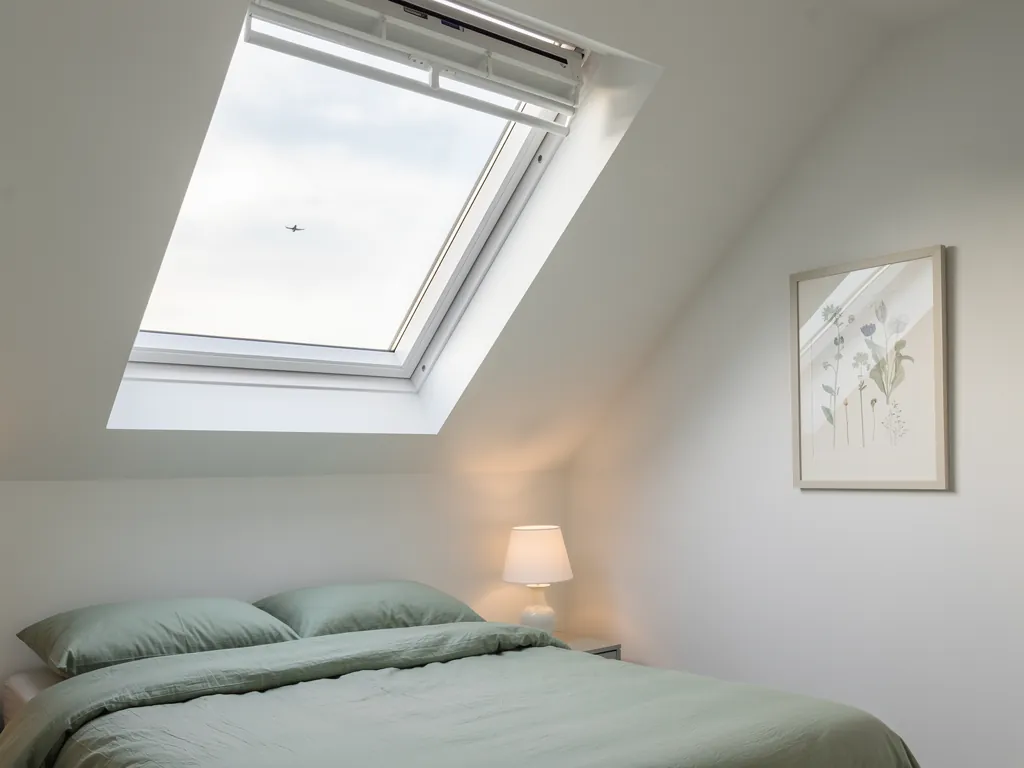
Glass builds compared by what they change
The table sets out the common builds for a flat rooflight, described by what the glass does. It gives no test figures, because the real result depends on the roof, the room and the way the unit is fixed.
| Build | What changes | In rain | Best for |
|---|---|---|---|
| Two toughened panes, equal | Nothing added | Hollow drum | Store or plant room |
| Toughened outer, laminated inner | Damping, safer overhead | Softer, less ring | Living rooms |
| Thick outer, laminated acoustic inner | Mass, damping, mismatch | Dull patter | Bedrooms, offices |
| Triple glazed, plain panes | Extra pane and cavity | Varies with build | Warmth first |
| Plastic sheet or dome | Thin, light surface | Loud crackle | Replace with glass |
A third pane is not a shortcut to quiet. Three plain panes of equal thickness can still drum, because each one is an undamped sheet. Our answer on whether triple glazing makes a rooflight quieter explains why a well-chosen double unit can beat it. Where a plastic dome is being replaced, the gain in rain alone can be large.
Frame, seals and the things that rattle
Good glass can be let down by a loose frame. A drop that hits a pane is one noise. A drop that makes the pane tick against its own edge is another, and it is the one you notice.
Each sealed unit sits in the frame on a bed of gasket or setting block. That contact has to be firm, continuous and even. If the unit can move a fraction of a millimetre under load, rain will make it chatter against the frame, and the sound carries straight down the metal into the ceiling lining. A tight, uniform bed of sealing material stops this. So does pressure from the glazing bead or cap, applied evenly around the whole perimeter rather than only at the corners.
Seals matter in a second way. Air finds its way through any gap, and sound travels with it. A tired perimeter seal lets the drumming of the outer glass straight into the room through the gap, which makes the best pane in the world sound thin. On an older unit that has begun to fail, the seals can be part of why the room has got louder, and the clearest remedy is to renew the whole unit. Our page on misted and failed rooflight replacement sets out when that is the right move.
Then there are the small metal parts. Ventilation trims, fixing caps, external drip edges and aluminium flashings can all ring under rain if they are loose or hollow. A drip edge that sits clear of the glass, bedded firmly and finished with a proper sealant, sounds far duller than one left springy. These are details, and they are the ones easily missed on a quick job, which is why we write them into the specification instead of leaving them to the day.
The upstand beneath the glass
The kerb or upstand is the box the rooflight sits on. It is the path by which vibration leaves the frame and enters the building, so its build has a direct effect on what you hear.
A rooflight set on a thin, hollow upstand can boom. The glass is a small drum sitting on top of a larger one. A solid timber upstand, well insulated and lined inside, gives the frame something dense to bear on, and that absorbs energy rather than amplifying it. The height matters as well. The upstand must rise far enough above the finished roof for the membrane to turn up it and be sealed, and a generous height keeps the frame clear of standing water and splash, which also removes the sound of water running against the base.
The membrane itself can be a source. Where a waterproofing layer is left loose as it turns up the kerb, it can flutter and tick in wind and rain. Bonding it fully to the upstand removes that. The same is true of any insulation board fixed on the outside: it should be firm, with no hollow voids behind it that act as a sounding box.
Inside, the lining of the upstand, often called the light well, is the last surface before the room. A hard, bare, reflective lining returns sound into the room as a ring. A well-finished plasterboard lining on a solid frame, with the joint between lining and ceiling made properly, is quieter and also spreads the light more evenly. Where the rooflight is being fitted into a new flat roof, the same thinking applies to the upstand as to the deck. The page on flat roof rooflight installation shows how the unit, kerb and roof are built as one assembly, since none of them behaves independently of the others.
What the room does with the sound
The same rain under the same glass will sound different in two different rooms. The room is the last stage, and it is worth reading before settling the build.
A kitchen extension with tiled floor, stone worktops and glazed doors has very little to soak up sound. Whatever comes through the rooflight bounces around until it fades. A bedroom with carpet, curtains and a bed is far more forgiving, and the same rain registers as background. So two households with identical rooflights can report very different experiences, and the honest fix for each is different.
That is why we start a survey by listening to the room. We look at the floor, the ceiling height, the walls, and what the room is used for. A home office where calls matter, a nursery, or a dining space where people sit under the glass in the evening all call for more than a utility room that is used on dry days. The result goes into the quiet spec that comes with the quote, which names the panes, the interlayer, the seals and the upstand, and says why each was chosen for that room. For the fuller picture of how the parts combine, read what goes into a quiet rooflight specification.
Soft furnishings help a little and cost little. A rug under the glass, upholstered seating and curtains at the doors all take edge off the sound that does arrive. They are an addition to a good specification and never a replacement for one.
Blinds are the question that follows next. A blind beneath the glass softens the tone slightly and shades the room, but it does not stop the pane vibrating, because the vibration happens above it. The page on whether a blind reduces rain noise under a skylight weighs what it can and cannot do.
Replacing a noisy unit without losing the light
Most noisy rooflights already exist. The question is what to do with the one above your head, and whether a replacement can quieten it without changing how the room looks or how much daylight it receives.
The opening can usually stay as it is. A replacement unit is ordered to fit the existing upstand, with the new glass build, new seals and a new perimeter detail, and the room keeps its light. Because daylight depends on the clear glass area and the glass tint, an acoustic laminated build can be chosen to match or better what was there. The light stays. Only the drumming changes.
Some points are worth settling before you order:
- Whether the existing kerb is sound, solid and the right height for the new unit.
- Whether the room needs the laminated acoustic build throughout or only in the rooms where people sit and sleep.
- Whether the new unit, being heavier, suits the structure beneath it.
- How the new glass will meet Part L for thermal performance, with the coatings and cavity chosen to do it.
A heavier acoustic unit weighs more than a plain one, so the kerb and the structure under it are checked as part of the survey. Replacement of rooflights is covered by the regulations, and our page on Building Regulations for rooflights explains how Parts L, K and B apply. Where the work is notifiable, we handle the Building Control notification, and the installation carries our 10-year workmanship guarantee.
Timing is practical. Autumn and winter are when the noise is noticed, but a survey is best done when you can describe the sound exactly. If you have a recording on your phone from a wet evening, send it with your quote request. It tells us more than a description does.
Questions about rain noise on flat glass
Will a quieter build make the room darker?
Not by any amount you would notice. Laminated glass can be supplied clear, and the interlayer is transparent. Light transmission is governed mainly by the coatings, and those can be selected to keep the room bright. If a solar control coating is wanted for a south-facing roof, that is a separate decision made for heat, and we write it down separately.
Is the noise worse in the first years or the later ones?
Seals age. A unit that was quiet when fitted can become louder as the perimeter seal or the setting blocks soften and let the glass move. That change is gradual, so people adapt to it and only notice when they compare with a new unit. If a room has grown louder over time, the seals are a prime suspect, and the answer is to replace the unit, as our page on signs a rooflight has failed explains.
Can an outdoor fix, like a mesh or coating, stop the drumming?
Nothing added to the outer face changes how the pane is built. A film or coating is thin and adds no real mass or damping, so the glass still flexes the same way beneath it. The lasting cure is the glazing build, not something stuck on top.
Does a rooflight over a bedroom need a different build from one over a kitchen?
Usually yes, because the two rooms are used at different hours and sound different. A bedroom needs the quiet at night and early morning, and has soft furnishings to help. A kitchen is hard and echoing. We look at both the use and the surfaces, then write the choice into the quiet spec, so each room gets the build it needs and not a single default.
If you would like the glass, seals and upstand chosen for your roof and your room, get a quote and we will write it down before the work begins.