Surrey · 22.7 miles from Crawley by road

Rooflights and skylights in Leatherhead, beside the Mole

Leatherhead grew from a river ford into a railway and bypass town, with a conservation area that carries Article 4 Directions. We specify the glass for the roof and the noise of your room.

Get a quote What is a quiet spec?

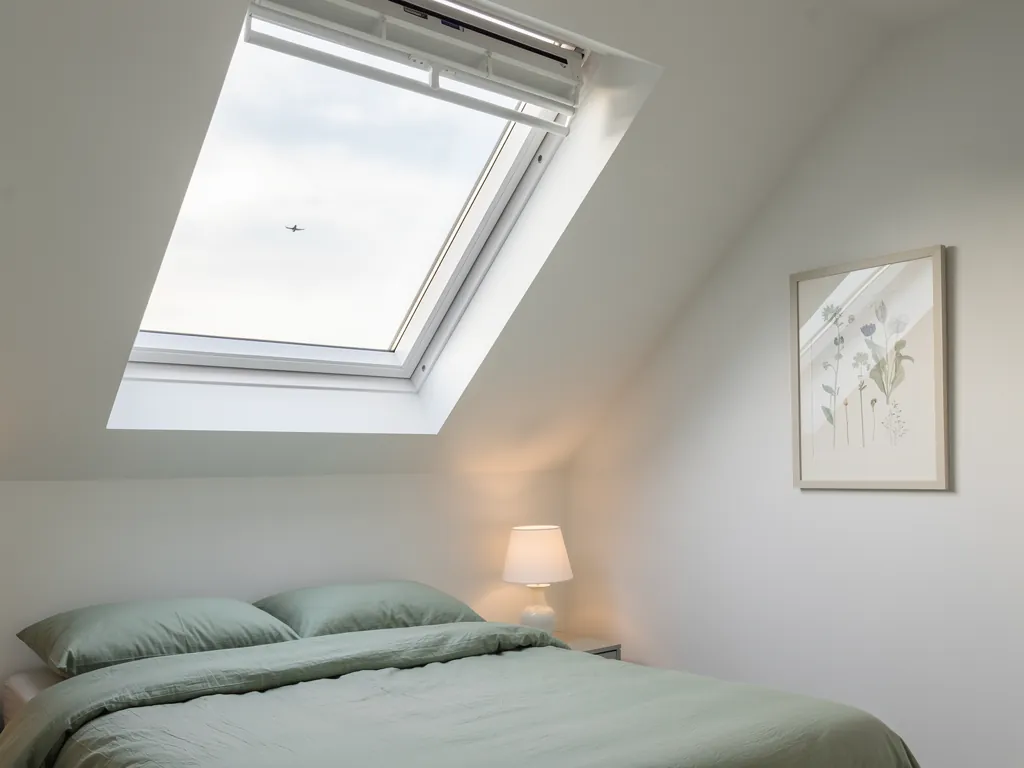
Seaside rooftops seen through a roof window in a loft room
Planning
Mole Valley District Council, under Surrey County Council
Homes
Early 1900s streets, 1921 council estates, post-war rebuilds
Roofs
Read in the loft and on the slope at survey
Setting
River Mole town with a railway, the A24 bypass and the M25

A railway from 1859, a 1930s bypass and a protected centre

  • The A24 bypass and the M25

    Main roads opened in 1934 and 1985 put a low, broad wash of traffic sound against some bedroom roofs.

  • Lines electrified by 1925

    Trains on the Dorking and Epsom routes repeat all day, and a loose gasket round an old sash lets that rhythm into the room.

  • Article 4 in the conservation area

    Leatherhead is one of three places in Mole Valley with these Directions, so the address is checked before any design begins.

  • Homes from three building waves

    Early twentieth-century streets, 1921 council housing and post-war rebuilds frame their roofs differently, so the loft is read first.

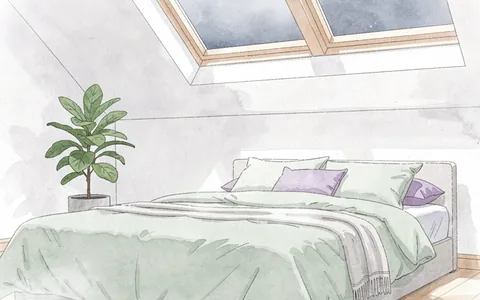
A spec sketch for a Fairfield Road loft bedroom

One Leatherhead bedroom set down as a sample. A worked sample for one room here; the real document follows the survey at your door.

Room:
loft bedroom in an early twentieth-century house off Fairfield Road
What we would listen for:
the steady wash of the bypass and the pulse of passing trains
Glazing:
acoustic laminate inside, a differently weighted outer glass, cavity sized for the room
Seals and upstand:
continuous sash gaskets, lined and insulated reveals, flashing planned to the covering

Noise out hereStill in here

The survey file

Rooflights in Leatherhead

Leatherhead is a town shaped by a river crossing, a railway and a bypass, in that order, and each of them leaves something behind in a room under a rooflight. Rooflight installation in Leatherhead starts with the roof over your head, moves on to the planning position at your address, and ends with the sound of the room once the glass is in. Skylight installation here is rarely one decision. It is a run of small ones, and this page walks through them in the order a survey visit does.

Town on the Mole

A ford on the Mole, seventeen miles from London

Leatherhead sits on the River Mole in Surrey, 22.7 road miles from Crawley, with a long tail of housing beyond the town edge.

Leatherhead sits on the River Mole in Surrey, about 17 miles south of central London and 22.7 road miles from Crawley, comfortably inside the thirty miles we cover.

The name most likely comes from a ford, a place where the river could be crossed, and the town grew along the water from there. At the 2011 census the town itself held 11,316 people, and the built-up area running out towards Effingham held 32,522. So Leatherhead is a real town with a real edge, and then a long tail of housing that blends into the next place along.

The planning authority is Mole Valley District Council, with Surrey County Council above it. That matters more than it sounds, because the council that judges a roof window on a Leatherhead terrace is also the council that wrote the town's conservation area guidance. One set of officers and one set of documents apply, and we read them for your address before we talk about products.

Leatherhead by the numbers

  • 22.7Road miles from CrawleyComfortably inside the thirty miles we cover.
  • 11,316People in the town at the 2011 censusThe town itself, with a real edge.
  • 32,522People in the built-up areaRunning out towards Effingham.

A rooflight is a hole in the roof, and the roof is the thinnest part of most homes. That is the thought behind the written quiet spec that comes with every quote. It records what we heard standing in your loft or under your flat roof, the glazing build we chose for it, and how the upstand and seals are finished. The quiet spec page shows the layout.

NextThree roads, one railway and what they do to a loft bedroom
Rail, bypass, motorway

Three roads, one railway and what they do to a loft bedroom

The railway came first, the A24 bypass second and the M25 last, and a loft can hear any of them.

Leatherhead has a transport history you can hear. The railway came first, the bypass second and the motorway last, and a bedroom under a roof window can pick up any of them depending on which way the house faces.

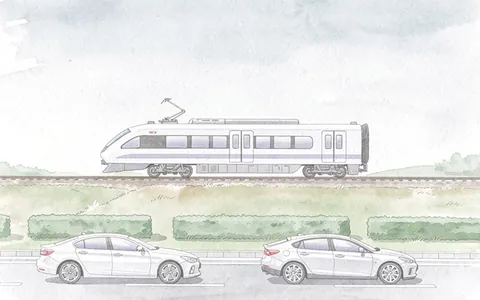
The Epsom and Leatherhead Railway opened on 1 February 1859, and the line on to Dorking followed in 1867. All the routes were electrified by 1925. Trains are a steady, repeating sound, and they tend to reach a room through the thinnest part of it, which in a loft is the roof.

The A24 bypass was built between 1931 and May 1934, putting a main road on a new line beside the town. The M25 connected Leatherhead to the national network in October 1985. Between them, those two roads give the area a background of moving traffic that is not loud at every address but is present at some. It is a low, broad sound rather than a sharp one.

How the town's noise arrived

  1. 1 February 1859Epsom and Leatherhead RailwayThe first line into the town.
  2. 1867Line on to DorkingTrains now run both ways from the station.
  3. 1925Routes electrifiedAll the routes.
  4. 1931 to May 1934A24 bypass builtA main road on a new line beside the town.
  5. October 1985M25 connects the townLeatherhead joins the national network.

Low, broad sound is the hardest kind to keep out with glass alone. Thin single panes pass it readily. A laminated acoustic inner pane, an outer pane of a different thickness and a properly sized cavity do much better, because two panes of unequal weight do not resonate together in the same way. We describe this by specification, not by promise: the survey notes which side of the house faces the traffic or the line, and the spec names the glass build that answers it. Our guide to road and rail noise through a rooflight goes into the reasoning.

A quieter street behind the main roads may need nothing special at all. Daylight is still the point. The spec exists so that the quiet is chosen on purpose rather than found by accident.

NextFairfield Road, Highlands Road and the houses that followed

Roofs a century old

Fairfield Road, Highlands Road and the houses that followed

Early twentieth-century streets, council estates and rebuilt homes each hide a different roof frame in the loft.

Early twentieth-century housing grew around Fairfield, Highlands and Kingston Roads, and those streets are where a rooflight conversation in this town often begins. The roofs in them were framed a century ago, and what is in the loft is the first thing to establish.

Council housing began in Leatherhead in 1921, and there was post-war rebuilding after bomb damage. So the town holds homes from at least three separate building waves: the early twentieth-century streets, the council estates that started just after the First World War, and the replacement housing put up once the damage was cleared. We do not assume which one you live in. The loft hatch tells us.

What we look for is how the roof was framed. Hand-cut rafters can usually take a new opening framed between them with trimmers, and a roof window can be set in line with the covering. Factory trusses carry load through every member, and cutting one casually is a mistake that shows up as a sagging ridge months later. Where trusses are present, the structure around the opening is supported first, and the survey says so plainly. That is a question for someone standing in the roof space with a torch, not for a catalogue.

What we read in the loft

  • Hand-cut rafters Usually take a new opening framed between them with trimmers.
  • Factory trusses The structure around the opening is supported first.
  • The covering Read on the roof, not assumed from the street.
  • Pitched or flat A roof window for a slope, a kerbed rooflight for a flat roof.

A pitched roof will usually take a roof window. A flat roof over an extension calls for a rooflight on a kerb, which is covered under flat roof rooflight installation. The two are different jobs with different risks, and a single house can need both.

What the town's records do not give us is the roof covering on any particular street, so we do not pretend to know it. The covering gets read on the roof, and the flashing is planned around whatever is actually there.

NextA conservation area with Article 4 Directions

Article 4 at your address

A conservation area with Article 4 Directions

Leatherhead is one of only three conservation areas in Mole Valley with Article 4 Directions, so the address decides.

Leatherhead has a conservation area, and it is one of only three in Mole Valley that carry Article 4 Directions, the others being Dorking and Brockham. That single fact decides the first question at a good many addresses.

Article 4 Directions withdraw certain permitted development rights where they apply. A rooflight that would normally need no planning application can, inside a protected area, need one. Whether it does depends on the address, the roof slope, which elevation faces the street and what the direction actually covers. We do not guess and we do not assert a status we have not checked. The position is checked for the address before any design work, and we tell you what we found.

Mole Valley produced a Leatherhead Conservation Area Appraisal and Management Plan in 2010. It is the document the council turns to when it judges a proposal, so it is the document we read too. It describes what is valued in the area, and that is what a planning officer weighs a rooflight against.

What decides whether planning is needed

  • The address Checked before any design work.
  • The roof slope Some slopes are treated differently.
  • The elevation facing the street Protected setting points to a rear slope.
  • What the direction covers Article 4 withdraws certain permitted development rights.

In practice, a protected setting points towards a particular style of unit. A low-profile roof window that sits flush with the covering, a slim frame and a rear slope are the usual starting points, and our conservation rooflight installation page sets out the options. Our page on planning permission for rooflights and skylights explains the general rules and where they tighten.

NextMatching the unit to the room

Unit by room

Matching the unit to the room

Which room the light goes into, and what that room hears, decides the unit, and the table sets out four pairings.

Most of the choice comes down to which room the light is going into and what that room hears. A table is the quickest way to set it out.

Loft bedroom, pitched roof

Likely unit
Roof window
What to settle first
Which side faces traffic or the line

Kitchen extension, flat roof

Likely unit
Fixed or opening rooflight on a kerb
What to settle first
Rain on flat glass, and the fall

Dark landing or bathroom

Likely unit
Sun tunnel
What to settle first
Roof space and the run of the tube

Wide rear room

Likely unit
Roof lantern
What to settle first
Weight, upstand and planning
RoomLikely unitWhat to settle first
Loft bedroom, pitched roofRoof windowWhich side faces traffic or the line
Kitchen extension, flat roofFixed or opening rooflight on a kerbRain on flat glass, and the fall
Dark landing or bathroomSun tunnelRoof space and the run of the tube
Wide rear roomRoof lanternWeight, upstand and planning

None of these is a fixed answer. A loft bedroom above a busy road may want the same quiet build that a kitchen lantern does, and a kitchen with a blank wall beside it may be happy with something simpler.

NextThe glass build for a room near a bypass

Glass for the bypass

The glass build for a room near a bypass

A short list of choices works together: laminated inner pane, a different outer thickness, cavity, seals and lining.

Glass decides most of what a rooflight lets in besides light, and the build is a short list of choices that work together.

The inner pane is laminated, which means two sheets bonded around an interlayer. That layer damps vibration, which is why laminated acoustic glass is the usual answer for traffic and rail. The outer pane is a different thickness, so the two sheets do not ring at the same pitch. The cavity between them is sized deliberately. Then come the seals: a continuous gasket round the sash, because a good pane in a loose frame is a wasted pane.

The fourth part is the upstand or the reveal. Sound travels through gaps and thin surrounds as readily as through glass, so the lining of the opening is insulated and finished cleanly. Our guide to acoustic laminated glass for rooflights explains how the layers behave, and we never put a decibel figure on any of it. The written spec names the products, the thicknesses and the finish, and that is the honest way to describe quiet.

The build, outside to room

  1. 1Outer pane A different thickness, so the two sheets do not ring at the same pitch.
  2. 2Cavity Sized deliberately between the panes.
  3. 3Laminated inner pane Two sheets bonded around an interlayer that damps vibration.
  4. 4Seals A continuous gasket round the sash.
  5. 5Upstand or reveal Insulated and finished cleanly.

Energy matters alongside noise. Current Building Regulations set limits for heat loss through new glazing in Approved Document L, and a rooflight has to meet them. Our page on Building Regulations for rooflights covers Parts L, K, B and F as they touch a roof opening.

NextRain on a flat roof, and why the fall matters

Fall and drumming

Rain on a flat roof, and why the fall matters

A flat roof is laid to a fall of commonly 1:80, and the kerb and glass are built to suit it.

A rooflight on a flat extension roof meets rain differently from one on a slope, and the drumming is easy to underrate until the first downpour.

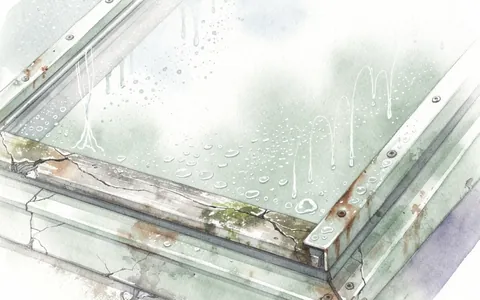
A flat roof is never dead level. It is laid to a fall, commonly 1:80, so that water runs to an outlet instead of standing. A kerb for a rooflight sits on that surface and has to be built to suit it. If the fall is poor, water collects at the upstream edge of the kerb, and the glazing sits in it. That is a problem for the roof, not the glass, and it is why the survey looks at the roof first.

Rain noise is a separate matter. Raindrops hitting a thin pane are loud, and the same drops on laminated glass with a heavier inner pane are far quieter. A thicker outer sheet, a deeper kerb and a suitable lining can all soften it. Our page on how to reduce rain noise under a flat rooflight goes through them one by one.

What shapes rain on a flat rooflight

  • The fallCommonly 1:80, so water runs to an outlet instead of standing.
  • The kerbBuilt to suit the fall, or water collects at the upstream edge.
  • The inner paneLaminated, with a heavier inner pane.
  • The outer sheetThicker, with a deeper kerb and suitable lining.

NextFrom survey to Building Control

Order of the job

From survey to Building Control

A Leatherhead job follows four steps, from survey to the Building Control notification, and the order matters more than speed.

A job in Leatherhead follows a short sequence, and the order matters more than the speed.

  1. We survey the roof and the room, and listen to what the room hears.
  2. We check the planning position for the address, including any protected setting.
  3. The written quote arrives with the quiet spec for that room.
  4. We install to current Building Regulations and handle the Building Control notification where the work is notifiable.

The notification is part of the job rather than an extra. Where a new opening changes the structure of a roof, Building Control has to be told, and we do that so you do not have to chase it afterwards.

Every installation carries a 10-year workmanship guarantee, which covers workmanship and is not insurance-backed. The guarantee page sets out what it covers. To begin, get a quote, or message us on WhatsApp.

NextA pedestrianised centre and the question of access

Access near the centre

A pedestrianised centre and the question of access

Close to the pedestrianised High Street, access is worth planning before the job, not during it.

The Swan Centre and the pedestrianised High Street came out of a redevelopment in the 1980s, and they changed what the middle of Leatherhead is. If your home is close to streets like that, access is worth thinking about before the job, not during it.

Materials go up by hand or by hoist rather than from a drive, and the order of work is planned around where a van can stand. A sun tunnel can suit a small hallway where a full window cannot.

The survey notes who shares the roof and who shares the wall. A flat with neighbours above has different obligations from a house, and the written spec records them, so that nothing is decided on the day.

What access changes

  • Moving materialsBy hand or hoist rather than from a drive.
  • Van positionThe order of work is planned around where a van can stand.
  • Small hallwaysA sun tunnel where a full window cannot go.
  • Shared roof or wallA flat with neighbours above has different obligations.

NextPlanning, noise and replacement: the Leatherhead queries

Leatherhead queries

Planning, noise and replacement: the Leatherhead queries

Four short answers on planning, bedroom noise, replacing an old unit and how far we travel.

The same handful of questions come up before a survey, and the answers are plainer than they sound.

Does being in Leatherhead mean I need planning permission?

Not automatically. Inside the conservation area, where Article 4 Directions apply, it may. Outside it, a rooflight often falls within permitted development, though the address is still checked. We confirm the position before any design work, and we tell you what the council's documents show.

Will a rooflight make my bedroom noisy?

It can, if it is thin glass in a loose frame facing traffic or the railway. A laminated acoustic inner pane, unequal outer glass, good seals and a lined upstand are how we keep the room quiet, and the quiet spec records each choice.

Can you replace an old unit rather than add a new one?

Yes. Replacing a tired unit is one of our ten services, and the same thinking applies: read the roof, choose the glass for the noise, and renew the seals. Our page on misted and failed rooflight replacement explains when a unit has reached the end.

How far do you travel to Leatherhead?

Leatherhead is 22.7 road miles from Crawley, within the thirty miles we cover. The main page lists everything we install.

Get a quote

Tell us about the room

  • No obligation
  • Quiet spec included
  • 10-year guarantee

Prefer to message? WhatsApp us or call 01293 974093, or email info@clearskylightscrawley.co.uk.