East Sussex · 27.7 miles from Crawley by road

Rooflights and skylights in Heathfield, inside the High Weald

Heathfield is a market town ringed by the High Weald, with a conservation area designated in 2017. We fit rooflights and skylights here, check the planning position for your address, and write down the glass we choose.

Get a quote What is a quiet spec?

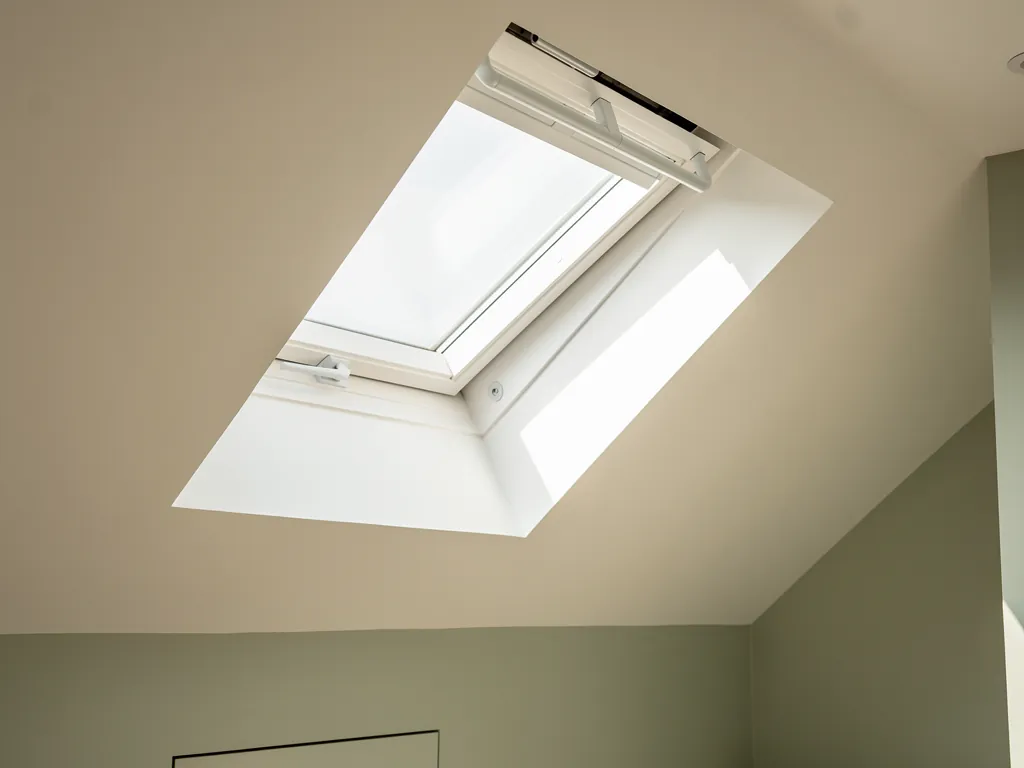
A freshly plastered reveal around a roof window in a sloping ceiling
Planning
Wealden District Council, with the High Weald AONB around the town
Homes
A market town of many ages; the loft tells us which
Roofs
Covering not recorded; identified in the loft at survey
Setting
Where the A267 and A265 meet, in open Wealden country

A 2017 conservation area, a listed park wall and the AONB beyond

  • Ground that is not square

    Old Wealden walls settle over centuries, so a roof frame is seldom true. The opening is drawn from the timbers we measure in the loft.

  • A junction of two main roads

    Heathfield sits where the A267 and A265 meet. Which way a loft bedroom faces decides how much road sound the glass has to answer.

  • Flat glass on rear extensions

    A lantern over a kitchen drums in a shower. A laminated inner pane and a firm, built-up upstand keep the rain at a low murmur.

  • Light in a protected setting

    Inside the conservation area, a low-profile unit set flush in the slope brings daylight without changing how the street reads.

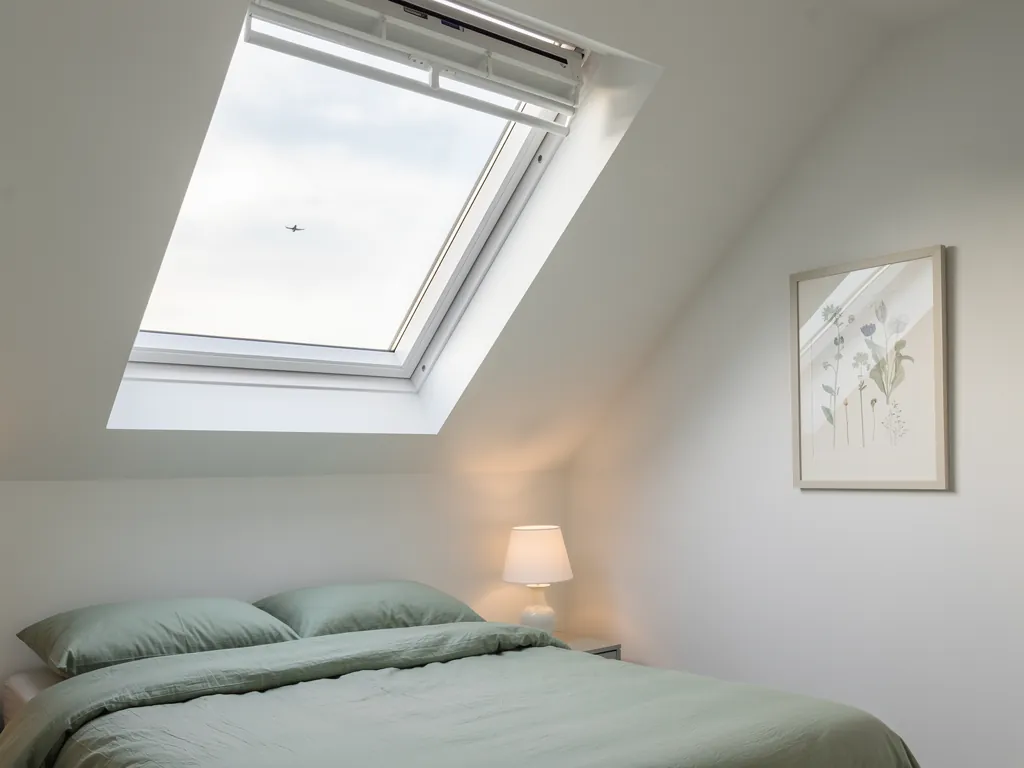
Spec idea for a bedroom near Old Heathfield

Our sample of the single sheet that accompanies each quote, drawn up for a room near Old Heathfield. Yours is drawn up after a survey visit.

Room:
loft bedroom in an older house near Old Heathfield, rear slope facing the garden
What we would listen for:
road sound carried across the roofs at night, and rain on the slope in a shower
Glazing:
room-side laminate, a thicker or thinner outer sheet, warm-edge spacer, flush low frame
Seals and upstand:
compressed gaskets all round, flashing lapped under the covering, opening trimmed between the rafters

Noise out hereStill in here

The survey file

Rooflights in Heathfield

Heathfield is a market town in Wealden District, East Sussex, and a rooflight installation here starts from its particular mix of ancient manor, parkland, protected village core and High Weald countryside. This page takes the town as the record describes it, sets out who decides what, and explains the glass, seals and upstand we would choose for a room under a rooflight or skylight in a place like this one.

At the crossroads

A market town where the A267 meets the A265

A town at a road junction, well inside our ring, small enough that a rooflight is a private matter.

Heathfield sits near the junction of two main roads, about 16 miles from Tunbridge Wells in one direction and about 16 miles from Eastbourne in the other. It is 27.7 road miles from our base in Crawley, which is well inside the 30-mile ring we cover, so a survey here is a planned visit with the tape, the ladder and the right questions already prepared.

The 2021 census recorded 7,667 residents. The town became part of the Heathfield and Waldron civil parish in 1990. That is a town of a size where a rooflight is a private matter between you, your roof and the planning rules for your address, with no dense terrace where every opening is seen from forty windows.

A rooflight is a hole in the roof with glass in it. A skylight is the same thing under another name, and on a roof the two words mean the same. Daylight is the reason anyone fits one. The second question, which this page returns to, is what else the glass lets into the room below.

Heathfield at a glance

  • 7,667Residents at the 2021 censusA town of a size where a rooflight is rarely overlooked.
  • 27.7 road milesFrom our base in CrawleyWell inside the 30-mile ring.
  • 16 milesTo Tunbridge Wells or EastbourneAbout the same distance in each direction.
  • 1990Joined the civil parishHeathfield and Waldron civil parish.

If you are comparing neighbouring places, the pages for Mayfield and Uckfield each start from their own records, and the homepage, Skylight and Rooflight Installation in Crawley, sets out how we work across the whole area.
NextHigh Weald countryside on every side

The AONB setting

High Weald countryside on every side

A designated landscape does not forbid a rooflight, but size, position and finish deserve a little more care.

Heathfield is surrounded by the High Weald Area of Outstanding Natural Beauty. For a householder, that setting is the thing to keep in mind before anything else, because it shapes how a roof opening is looked at by those who decide.

A designated landscape does not mean a rooflight is forbidden. It means the question of where the glass sits, how large it is and how it reads against the roof deserves a little more care than it would in a place with no such designation. A small roof window set flush with the slope is a different proposition from a large lantern standing proud of a flat roof, and the survey is where we work out which one suits your house.

The research file for the town does not give a rule for rooflights in the AONB, and we do not invent one. What we can do is say where the question goes. The position for your address is checked with Wealden District Council before any order is placed, and the result goes into the paperwork that comes with your quote. Our guide to planning permission for rooflights and skylights explains the general framework, and the address-specific answer is the piece we confirm for you.

What the setting asks about the opening

  • Where the glass sitsOn a rear slope or a front one.
  • How large it isA small flush window differs from a large lantern standing proud.
  • How it reads on the roofSet flush with the slope, it sits quietly in the pitch.
  • The council checkWealden District Council is asked about your address before any order.

NextSandstone, siltstone and clay under the town

Ground and frame

Sandstone, siltstone and clay under the town

The ground matters little to the glass, but a settled wall leaves a frame that has to be read from the loft.

Heathfield lies on sandstones, siltstones and mudstones of the Ashdown Formation, which is part of the Hastings Beds. The mudstones are clays, and the sandstones are the harder rock that gave the area its stone walling.

It is fair to ask whether ground geology matters to a rooflight at all. Mostly it does not, because the glass is fitted to the roof and the roof is held up by its own walls. Where the ground shows up is in the materials a district has to hand, and in the way old walls have moved over the centuries. A wall that has settled leaves a roof frame that is not quite square, and a rooflight must be fitted to the frame that exists, not the one a drawing assumes.

So the first job at the survey is to read the roof from the loft. We measure between rafters, look at the condition of the timbers, and note what covers the slope outside. The research on Heathfield does not give a roof covering for the town, and we do not guess one from the street. Whatever your roof is made of, it is identified in the loft and written on the survey sheet.

The first job at the survey

  1. 01Go into the loftThe roof is read from inside before anything else.
  2. 02Measure between raftersThe spacing sets where an opening can go.
  3. 03Check the timbersWe look at their condition.
  4. 04Note the coveringWhat covers the slope outside is identified, not guessed.
  5. 05Write it on the sheetWhatever the roof is made of goes on the survey sheet.

NextOld Heathfield and Cade Street: the conservation area of 2017

A recent designation

Old Heathfield and Cade Street: the conservation area of 2017

A designation as recent as 2017 means some owners have never had to think about it before.

Wealden District Council designated the Old Heathfield and Cade Street Conservation Area on 22 March 2017. It is one of the conservation areas the council lists on its heritage pages, among 41 in the district, of which 33 sit under the council's own control.

The date is useful. A designation as recent as 2017 means the boundary was drawn with current planning policy in mind, and it means there may be houses whose owners have never had to think about it before. If your home is inside the boundary, or close to it, the route for roof glazing changes. Rooflights on a front slope that faces the public street are the most visible, and those are the openings a planning officer looks at first.

The conservation position is always checked for the address. We do not assume it from a street name, and we do not tell you a house is in or out without looking at the council's map. Where the answer is that the house is inside the area, the work usually turns toward a low-profile conservation rooflight, sized and set so that it sits flat in the pitch. Our page on conservation rooflight installation describes that kind of unit and how it is fitted.

The conservation area in figures

  • 22 March 2017Designated by Wealden District CouncilThe Old Heathfield and Cade Street Conservation Area.
  • 41Conservation areas in the districtAs listed on the council's heritage pages.
  • 33Under the council's own controlOf the 41 in the district.

NextHeathfield Park, its long wall and Gibraltar Tower

The park wall

Heathfield Park, its long wall and Gibraltar Tower

A listed park wall shows how much of the town's character rests on stone, and listed structures bring their own rules.

Heathfield Park has a sandstone park wall about 5.6 kilometres long, built between 1833 and 1836, and Gibraltar Tower stands in the park. Historic England holds a list entry for the wall, and a listing is the heaviest level of protection a building or structure can have.

Why does a park wall matter to a household thinking about a rooflight? Because it shows how much of Heathfield's character rests on stone and old estate boundaries, and because listed structures bring their own rules. A listed building needs consent for changes that affect its character, and that includes the roof. If your house is itself listed, or stands in the grounds of something that is, the position is not the same as it is for an ordinary home.

The research gives us the wall and the tower. It does not name any listed house in the town, and it does not say which homes are close to the park. Whether yours is covered is found by checking the national list for your address, which we do at the survey stage. For a listed house the unit, its size and its position are agreed before a single tile is lifted.

What the park adds to the picture

  • The wallSandstone, about 5.6 kilometres long, built between 1833 and 1836.
  • Gibraltar TowerIt stands in the park.
  • The list entryHistoric England holds one for the wall.
  • Your own houseChecked against the national list for your address at the survey stage.

NextA railway that closed in 1965, and a trail where it ran

The old railway

A railway that closed in 1965, and a trail where it ran

The trains are gone, so the sound a room hears is settled on the day we stand in it.

Heathfield railway station on the Cuckoo Line opened on 5 April 1880 and closed to passengers on 14 June 1965. The route is now the Cuckoo Trail. That is a useful piece of town history, and it tells a householder something about noise: the trains that once ran along the line are gone.

The record we work from says nothing about how loud the town is. It does not give a figure for traffic on the A267 or the A265, and it does not suggest any aircraft noise, so we do not write about either as though we knew. What it gives us is a geography: a town at a road junction, in open Wealden country, with no railway now. The sound that a room under a rooflight hears is settled on the day we stand in it.

That day matters. A loft bedroom hears the road at night in a way the same house never does at noon, and a kitchen extension hears rain in a way it never hears in dry weather. We listen, we note what we hear, and the noise we hear is what the glazing is built to answer.

The Cuckoo Line at Heathfield

  1. 5 April 1880Station opensHeathfield station opens on the Cuckoo Line.
  2. 14 June 1965Closed to passengersThe last passenger trains run.
  3. TodayThe Cuckoo TrailThe route is now a trail.

NextWhat each fact changes at the roof

Facts and decisions

What each fact changes at the roof

One table connects each fact about the town to the decision it changes at the roof.

The facts above point at different decisions. The table sets the connection out in one place, so you can see which parts of your own situation are likely to matter.

High Weald AONB all around

What it changes
Size, position and finish of the opening
When it is settled
Planning check for the address

Conservation area of 2017

What it changes
Whether a low-profile unit is needed
When it is settled
Council map, then survey

Historic England list entry

What it changes
Consent, if the house itself is listed
When it is settled
National list, before the quote

Ashdown Formation ground

What it changes
Little at roof level; read the frame
When it is settled
In the loft, at survey

Junction of two main roads

What it changes
Which way the quiet glass faces
When it is settled
Listening at the survey
What the record saysWhat it changesWhen it is settled
High Weald AONB all aroundSize, position and finish of the openingPlanning check for the address
Conservation area of 2017Whether a low-profile unit is neededCouncil map, then survey
Historic England list entryConsent, if the house itself is listedNational list, before the quote
Ashdown Formation groundLittle at roof level; read the frameIn the loft, at survey
Junction of two main roadsWhich way the quiet glass facesListening at the survey

NextReading a Heathfield roof before choosing the glass

Reading the roof

Reading a Heathfield roof before choosing the glass

The age of a roof decides how it is framed, and the frame decides how the opening is cut.

A market town with records back to 1234, fair privileges in 1316 and iron-working in the sixteenth and seventeenth centuries is a town of many ages. The earliest market record and the later history tell us the place has been lived in a very long time, and that houses here were built over many generations rather than in one go.

The research file gives no housing eras for the town, so no single decade is named here. What we say is that the age of a roof decides how it is framed, and the frame decides how the opening is cut.

  • An older roof, cut by hand. The rafters may be uneven, and the spacing will differ from bay to bay. The opening is drawn to fit what is there, trimmed and supported so the load is carried past it.
  • A newer roof, framed to a pattern. The members sit at a regular spacing, and a roof window sized to the gap between two of them can go in with the least disturbance to the structure.

In both cases we work from the loft, because the timbers there are the truth. The second half of the survey is the room below: where the light should fall, how high the ceiling is, and what the window will face. The guides on where to position a skylight in a room and how to size a rooflight for the room cover the general thinking, and the survey applies it to your house.

NextRain on flat glass, and the quiet spec that goes with it

Rain and the spec

Rain on flat glass, and the quiet spec that goes with it

A flat rooflight is a large, hard surface for rain, and the glazing build is the answer.

Flat-roofed rear extensions and kitchens are where rainfall is loudest, in Heathfield as anywhere. A flat roof lantern or a flat rooflight is a large, hard surface, and rain lands on it as a steady drumming that the room has no way to soften. That applies to every flat rooflight in every town, and it holds here in the same way, since the physics are the same.

We answer it with the build of the glass. A laminated inner pane damps the sound the outer pane would pass into the room. A second pane of a different thickness breaks up the vibration. The seals are compressed all round, so no small gap whistles or rattles, and the upstand or kerb is built up enough that the frame sits firm and the roof membrane runs up and under it. Our page on reducing rain noise under a flat rooflight gives the reasoning in detail, and the service page for flat roof rooflight installation covers how these units are fitted.

Every quote comes with a one-page written quiet spec for the room. It records what we heard at the survey, the glazing build we propose and why, and how the seals and upstand are finished. It is a written specification, not a claim, and you can read it before you agree to anything. The fuller explanation is on the quiet spec page.

The build that answers rain

  1. 1Second pane, different thickness Breaks up the vibration.
  2. 2Laminated inner pane Damps the sound the outer pane would pass into the room.
  3. 3Compressed seals All round, so no small gap whistles or rattles.
  4. 4Upstand or kerb Built up so the frame sits firm and the membrane runs up and under it.

NextBuilding Regulations, Building Control and the written trail

Regulations and trail

Building Regulations, Building Control and the written trail

New roof glazing is covered by the Building Regulations whatever the planning position.

New roof glazing is covered by the Building Regulations whatever the planning position. We install to current regulations, and where the work is notifiable we handle the Building Control notification, so you do not have to chase a form. Thermal performance, safe glazing, structure around the opening, and ventilation in a loft room are all part of the picture, and our guide to Building Regulations for rooflights explains them in general terms.

On a practical level, you finish with a room that is lit, finished inside, and backed by a 10-year workmanship guarantee. The guarantee covers our workmanship, which the written spec and the notification trail are there to support.

What the regulations touch

  • Thermal performance How much heat the new glazing may lose.
  • Safe glazing Glass that is safe where it is placed.
  • Structure around the opening The frame is supported around the new opening.
  • Ventilation in a loft room Part of the picture where the room needs it.

NextWhat Heathfield owners tend to want answered before a survey

Common questions

What Heathfield owners tend to want answered before a survey

The points that come up in a market town ringed by the High Weald, with a recent conservation area.

These are the points that come up when a home sits in a market town ringed by the High Weald, with a recent conservation area and a park wall on the national list.

Is my house inside the Old Heathfield and Cade Street conservation area?

It depends on the address, and the answer comes from Wealden District Council's map rather than from the street name. The area was designated on 22 March 2017. We check it for your address before any unit is chosen, and we put the result in the paperwork with your quote.

Does the High Weald AONB stop me fitting a rooflight?

The designation does not stop one. It does mean the size, position and finish of the opening are worth thinking through with some care. A flush roof window on a rear slope raises fewer questions than a large unit on a slope that faces the street, and the planning check for your address tells us which applies.

My roof is very old. Can it take a rooflight?

Usually yes, once the frame has been read from the loft. An older roof may need the opening trimmed and supported so that the load passes around it. We measure between the rafters, look at the timbers, and draw the opening from what is really there.

How do I start?

Tell us the room, the roof and the address through the quote form, or message us on WhatsApp. We arrange a survey, listen in the room, and send a written quote with its quiet spec. The costs page explains what moves a price in general terms.

Get a quote

Tell us about the room

  • No obligation
  • Quiet spec included
  • 10-year guarantee

Prefer to message? WhatsApp us or call 01293 974093, or email info@clearskylightscrawley.co.uk.