A replacement glass unit is made to order, to the millimetre, and the figure that decides whether it drops in cleanly is almost never the one you can see from the room. Measuring a failed rooflight for replacement means taking three sizes from the outside of the roof: the glass itself, the rebate it sits in, and the kerb or upstand that carries the whole frame. This guide sets out what we measure, in what order, with what tolerance, and what you can do from the landing to help us arrive with the right numbers.
The hole you see from below is the wrong size
Stand under a skylight and you see a bright rectangle. That rectangle is the light well, the plasterboard lining or the gap between two rafters. It is smaller than the glass, and it tells you very little about the unit on top.
The glass is larger than the visible opening because it tucks under the frame and into a rebate on every side. The frame is larger again, because it sits on a kerb, a flashing or an upstand that has its own width. So three nested sizes exist on every failed rooflight, and a measurement taken from inside can be out by the width of the frame twice over. On a small unit that is the difference between a fit and a rejected delivery.
A measurement from the room is useful for one thing only: a rough idea of scale, so that we can talk sensibly before a survey. Any figure that goes on an order is taken from the roof, with the failed unit in front of us, and then checked a second way.
That is why a tape measure held up to the ceiling does not produce an order. It produces a conversation. The survey turns the conversation into numbers that a factory can cut glass to.
Glass size, sight size and frame size
Three words get used for the same pane, and a quote that mixes them up can leave a gap at the edge of the order. Each has a precise meaning in a glazing workshop.
Overall glass size is the full width and height of the sealed unit, edge to edge, including the part hidden in the rebate. This is the size the factory cuts. Sight size is the part you can see once the beading or frame has covered the edges, and it is smaller by the width of the overlap on each side. Frame size is the outside of the aluminium, timber or PVC that holds the glass, which is what sits on the kerb.
- Overall glass size: what the glazier orders.
- Sight size: what the daylight and the room below care about.
- Frame size: what must match the kerb or the roof opening.
We write all three on the survey sheet, and we say which one each figure is. A replacement unit ordered to sight size arrives too small to seat. One ordered to frame size arrives too large to go in. Neither mistake shows until the glass is on site, which is the most expensive place to find it.
Reading the rebate: depth, ledge and clearance
The rebate is the groove or step in the frame that the glass sits in. It decides how thick a replacement unit can be, and therefore what glazing build you can choose.
Most failed units are a factory-sealed pair of panes with a spacer bar between them. A typical unit of this kind is in the region of 24 to 28 millimetres thick overall, though older ones are thinner and some lantern units are much thicker. The rebate was cut for the unit that was originally fitted. If the new glass is thicker, it may not seat. If it is thinner, it needs packers and a different bead, and the seals need to be chosen to close the gap.
We measure the rebate at three points: the depth of the step, the width of the ledge the glass rests on, and the clearance between the glass edge and the back of the groove. Clearance matters because glass moves with heat. Overall glass size is normally cut a few millimetres smaller than the space it fills, so that the pane can expand without touching the frame. That gap is taken up by setting blocks at the bottom and by the glazing gasket or sealant around the edge.
Ask for the rebate measurements on any written quote. If an order sheet lists only a width and a height, the thickness and the rebate have been guessed.
Measuring on the roof: the order we work in
A survey on the roof follows the same sequence every time, because each figure checks the last. It takes less time than this description suggests.
First we photograph the unit and the roof around it, and read any label. Many sealed units carry a stamp on the spacer bar or a manufacturer mark on the frame, which records the maker, the glass build and sometimes the date. Second, we measure the frame outside to outside, width then height, to the nearest millimetre. Third, we measure the kerb or upstand, which is the raised edge the frame stands on, and record its height above the roof surface at all four sides.
Fourth, where the glass can be lifted out or the bead removed for a look, we measure the glass and the rebate directly. Where it cannot, we work from the frame size and the known section of that product. Fifth, we measure both diagonals of the opening. The two diagonals should match within a few millimetres. If they do not, the frame is out of square, which affects the order, because a sealed unit is a precise rectangle that cannot be persuaded into a parallelogram.
Sixth, we measure the thickness of the existing unit at the edge, and note the depth of the failed seal line where it has opened. Seventh, we check the fall and level of the roof around the kerb. A unit on a kerb that has settled or bowed over time will want different packing from the one we are taking out.
Kerb, upstand and flashing: what the glass is sitting on
Every rooflight sits on something. On a flat roof it is a kerb, a box of timber or insulated composite that raises the glazing above the waterproofing. On a pitched roof it is a set of flashings that shed water around the frame. The replacement has to match what is there, or the roof around it has to change too.
The height of the kerb matters for two reasons. The first is water. The upstand has to stand high enough above the finished roof surface to keep rain and standing water away from the frame, and that height is set by the roof build and the membrane in use. The second is fit: the new frame must seat on the same footprint, at the same level, so that the membrane that already turns up the kerb meets the new frame without a step.
We measure the outside of the kerb at the top, where the frame lands, and again near the base, where any taper shows. We note the material. Timber kerbs can move and rot; composite kerbs hold their shape. If the kerb is sound and square, the new unit goes on it. If it has moved, the measurement is taken from the kerb as it is, not from the drawing it was built to, because the drawing is not what the glass has to fit.
When the kerb and frame have both gone past saving, the job changes from a glass swap to a new rooflight on a new upstand. When the frame has failed too covers how that decision is made and how it changes the measuring.
Dome, lantern, flat glass and roof window each measure differently
The same three sizes apply to every type, but each type hides them in a different place. A table keeps the differences in one view.
| Type | Measure first | Watch for | Common trap |
|---|---|---|---|
| Flat glass on a kerb | Overall pane and rebate | Unit thickness | Sight size ordered by mistake |
| Roof lantern | Each pane, separately | Tapered hips and ridge | Panes differ in size |
| Polycarbonate dome | Kerb and dome flange | Dome height and lip | Measuring the light well |
| Roof window | Frame and pitch | Flashing kit size | Code on a worn label |
A lantern is the most demanding. Each pane is cut to a slightly different shape because the roof pitches slope inward and the hips are angled, so a lantern with twelve panes can have several different unit sizes. We measure and number each one. The guide to misted roof lantern panels explains how the panes are numbered and how a single unit is identified in the bar system.
A dome is simpler but has its own hazard. The dome sits on a kerb with a lip or flange, and the flange is what matters. The clear opening looks much smaller than the dome. For the detail, see failed polycarbonate dome rooflights.
A roof window in a pitched roof is ordered largely by its manufacturer code, and misted VELUX windows sets out how that code is read, what to do if the label has worn away and how the pitch changes the flashing choice.
What you can measure from inside the house
You cannot produce an order from the room, but you can save us time and give a sensible early steer. A few minutes with a tape and a phone gets a conversation started.
Measure the visible opening in both directions and write them down. Note whether the rooflight is fixed or opens, and whether it has a blind or a lining. Take a photograph from directly below, and one from the side, to show the depth of the light well. If the unit has a label on the frame, photograph that close up, because a sharp picture of a label is worth more than any measurement.
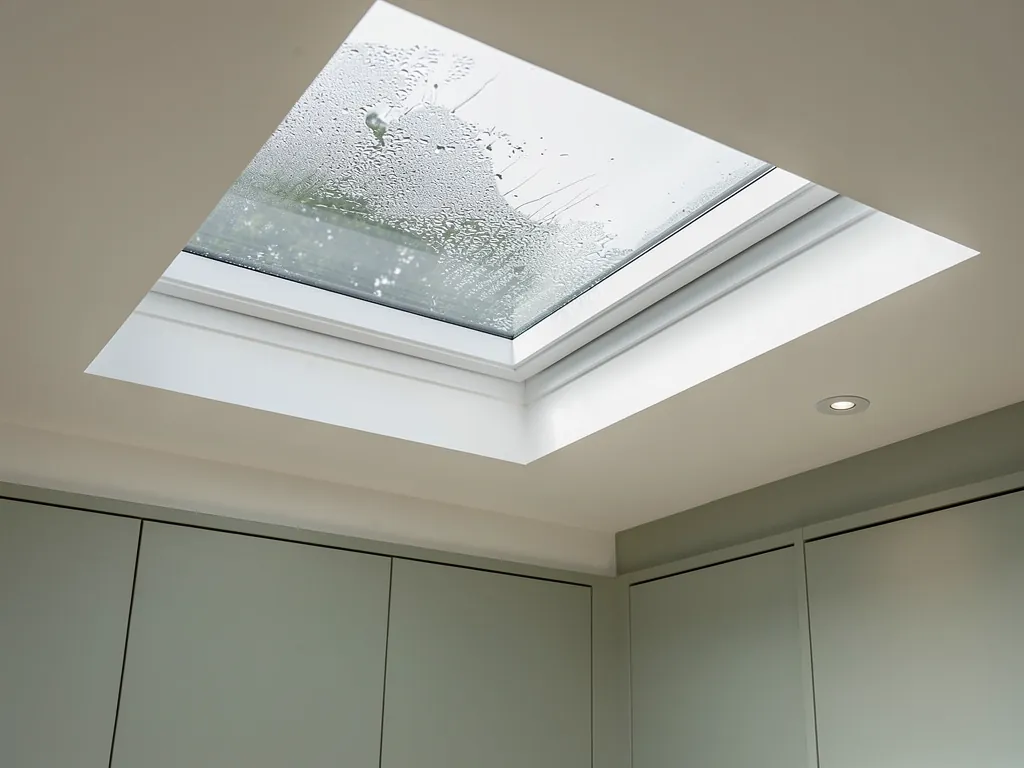
Then take a photograph of the fault. If the glass is misted, cloudy or cracked, show it, because the failure mode tells us what to look for on the roof. Replacing the glass unit or the whole rooflight explains why the fault decides the scope.
Please leave the roof itself to us. The glass may be weaker than it looks, the membrane may be fragile and a wet roof is slippery. Roof measurements are taken from the outside with the right access, and that is our part of the job.
Tolerances: how accurate the numbers have to be
A sealed unit is factory-made. It cannot be trimmed on site, so the tolerance on the order is small.
As a working rule, we measure to the nearest millimetre and then deduct a few millimetres from the opening to set the overall glass size, so that the glass sits free of the frame. The exact deduction depends on the frame material and the size of the unit. A larger pane moves more as it warms and cools, so a bigger unit gets a larger clearance.
The measurement is taken twice, by different routes, and the two results have to agree. If the frame size and the glass size imply different rebates, we go back up and look again. Checking takes a few minutes. A wrong unit takes weeks.
That matters because of the wait. Replacement units are made after the order is placed, not cut from stock. How long a replacement glass unit takes to arrive shows why a mistake on the order sheet costs weeks, and why we check before we send it.
Old products, lost labels and odd sizes
Many failed rooflights are old. The manufacturer may have changed the range, renamed the model or closed. The label may have gone. The sizes may be imperial conversions that match no catalogue.
None of that stops a replacement, because a sealed unit only needs the measurements. A unit made to fit a discontinued product is cut from the same three figures. What changes is how careful the survey has to be, because there is no catalogue to cross-check against. Replacing a unit in a skylight that is no longer made goes through the options.
Odd sizes turn up in extensions where an earlier owner cut the opening to suit a bought-in pane and later swapped it for something different. In that case we take the dimensions from the kerb and rebate as they are today, and we photograph the reference points so that the order sheet and the roof can be compared later.
The measurements that shape the upgrade
A replacement is the moment to decide what the new glass should do. The rebate and the kerb set the limits on that choice, so they belong in the measuring conversation.
A deeper rebate lets us specify a thicker build, such as a laminated inner pane with a wider cavity, which is the route we choose when the room needs to be calmer. A shallow rebate limits the glass thickness, and then the choice moves to the seals and the upstand. Rain drumming on an outer pane is a function of how the glass is built and supported, and the measurement tells us what is possible.
Good practice asks for safety glazing overhead in a home, and Part L covers the thermal performance of replacement glazed elements, so the new unit has to be chosen with both in mind. Overhead glass that could fall on someone is normally specified with a laminated inner pane, which holds together if the outer one is damaged. The same pane also helps the room sound quieter, which is why the two specifications often travel together.
Every quote comes with a written note on this, the quiet spec, which records the glass build, the seals and the upstand finish that we measured for. Upgrading the glazing when a rooflight unit fails covers the choices in more detail.
What goes on the order sheet
At the end of the survey, every figure goes onto one sheet, and that sheet is what the factory works from. Holding it to a fixed layout means nothing is left to memory.
- A plan sketch of the unit, with each side numbered.
- Frame outside size, width then height.
- Overall glass size, sight size and both diagonals.
- Rebate depth, ledge width and existing unit thickness.
- Kerb height at each side, material and condition.
- Roof pitch or fall, and the flashing or membrane in use.
- The glazing build specified for the new unit.
- Photographs of every side and of any label.
The sheet goes with the quote, so that you can see the numbers we are working from. If a figure looks wrong to you, it is easier to query it on paper than on the roof.
Where the work is notifiable, we handle the Building Control notification, and the survey figures are the basis for it. Everything is installed to current Building Regulations, and the work carries a 10-year workmanship guarantee.
Questions about measuring a failed unit
Can you measure a failed rooflight from a photograph?
A photograph gives a good first estimate, especially with a tape visible in the shot, and it helps us decide what to bring. It cannot replace a survey. The rebate, the kerb height and the diagonals are not visible in a picture, and they decide the order.
Does it matter whether the unit is misted or cracked?
The measuring is the same, but the fault changes what we look for. A misted unit points to a failed edge seal, so we check the rebate and drainage around the glass. A cracked unit points to stress or impact, so we look at the packing, the level and the fixings. The misted and failed rooflight replacement hub sets out both paths.
What if the new unit has to be a different thickness?
Then the glazing beads and gaskets are changed to suit, and that is agreed before the order goes in. A build that is thicker than the rebate allows can often be reached with a different bead profile or a slightly different frame, and the survey records what is possible.
Will measuring mean going onto the roof?
Yes, in almost every case. Flat roofs, slopes and lanterns are measured from outside with the right access and edge protection. Where the room side gives enough to quote, we say so, and the roof visit is kept short.
To book a survey, use the quote form on this page, send a message on WhatsApp, or write to info@clearskylightscrawley.co.uk. Photographs of the unit and its label are a good start.