A VELUX quote has a line for the glazing, and on many quotes it is the shortest line on the page. It names a pane type, sometimes by a code and sometimes by a phrase, and the price moves a little depending on which one is typed there. That one line decides what a loft room will hear on a wet morning. This guide is about reading that line. It explains what a VELUX noise reduction glazing option is in terms of construction, how it differs from the standard pane, where the glazing stops and the rest of the fitting takes over, and how to ask for the choice to be written down. There are no test figures anywhere in it. Each option is described by what goes into the pane and where it sits in the roof.
The glazing line on a VELUX quote
Every VELUX roof window is sold as a type, a size and a glazing. The type and size are easy to find on a data plate. The glazing is the part people skip, and it is the part a quiet room depends on.
Think of a VELUX order as three short answers. The first says how the sash moves and what the frame is made of, which the guide to GGL, GPL and GGU covers. The second is the frame dimension, explained in how to read a VELUX size code. The third is the pane that goes in the sash. Two windows with identical type and size codes can carry different glazing, and from the landing they look the same. They do not sound the same in a downpour.
So when a quote arrives, find the glazing wording before anything else. If it is missing, ask for it. If it is there as a short code, ask what the code means in words for the current year's range, because VELUX revises its product list from time to time and the letters on an old data plate may not match the letters on this year's price list. We read the current literature for the product named on your quote and write the pane in plain words: how many sheets, what each is made of, and what is between them.
That last sentence is also the test of any installer's quote. A line that says "double glazed" has told you very little. A line that says "laminated inner pane, sealed gas-filled unit, toughened outer sheet" has told you what is in the window.
What a noise reduction pane is made of
VELUX lists a noise reduction glazing option for its roof windows, offered alongside the standard pane. The idea behind any such pane is simple: change what the glass is made of so that it rings less, rather than making it merely thicker.
A standard roof window pane already has a job to do. The outer sheet is toughened so that it stands up to weather. The inner sheet is laminated, which means two layers of glass are bonded with a plastic interlayer, so that a cracked pane stays in the frame over your head. That is a safety feature first. Everything a manufacturer adds for noise is built on that baseline.
Three changes are the usual ones in a pane designed to be quieter:
- A different interlayer inside the laminate, chosen for how well it soaks up vibration.
- Sheets of unequal thickness, so the two halves of the pane do not ring at the same pitch.
- A cavity and seal arrangement that keeps the pane stable in its frame.
The general science of the laminate is in the guide to acoustic laminated glass, and we will not rehearse it here. What matters on this page is narrower. When you choose a VELUX noise reduction pane you are choosing one named product with a published data sheet. You are not choosing "acoustic glass" in the abstract. The manufacturer's sheet is the place where its claims about that pane live, and we quote from it only when the product on your quote is the product on the sheet.
We make no promise here of what any pane will do to the noise in your room. The fair description is this: the option exists to make the room hear less of the same weather, and it does so by construction. How much less, in your loft, under your flight path, is a survey question.
Standard pane or noise reduction pane
The two choices suit different rooms. A side by side look makes the trade plain, and shows where the standard pane is enough.
| Point | Standard pane | Noise reduction pane | Decided by |
|---|---|---|---|
| Main aim | Warmth, safety, daylight | Calmer room in rain and traffic | The room's use |
| Inner sheet | Laminated for safety | Laminated, built to damp | Data sheet |
| Best for | Landings, studies, stairwells | Bedrooms, nurseries, offices | Survey |
| Where it is written | Quote line | Quote line and quiet spec | Both |
The standard pane is a sound product and a sensible one. A window over a stair, in a room nobody sits in, has no real use for the extra build. Spending on quiet where nobody listens is the wrong way round.
The noise reduction pane earns its place where someone spends long, still hours under the glass. A bed is the obvious case. A nursery is another, because a sleeping baby is the reason the decision is being made at all. A home office with calls in it is a third. In each the person is close to the glass, sitting or lying still, and listening more than they realise.
Daylight is not the price of the choice. Clear laminated glass of either kind lets light through, and the point of a rooflight is still the light. If a pane you are offered is tinted, coated for solar control or otherwise changed in colour, that is a different decision with a different reason, and it should be on the quote under its own name.
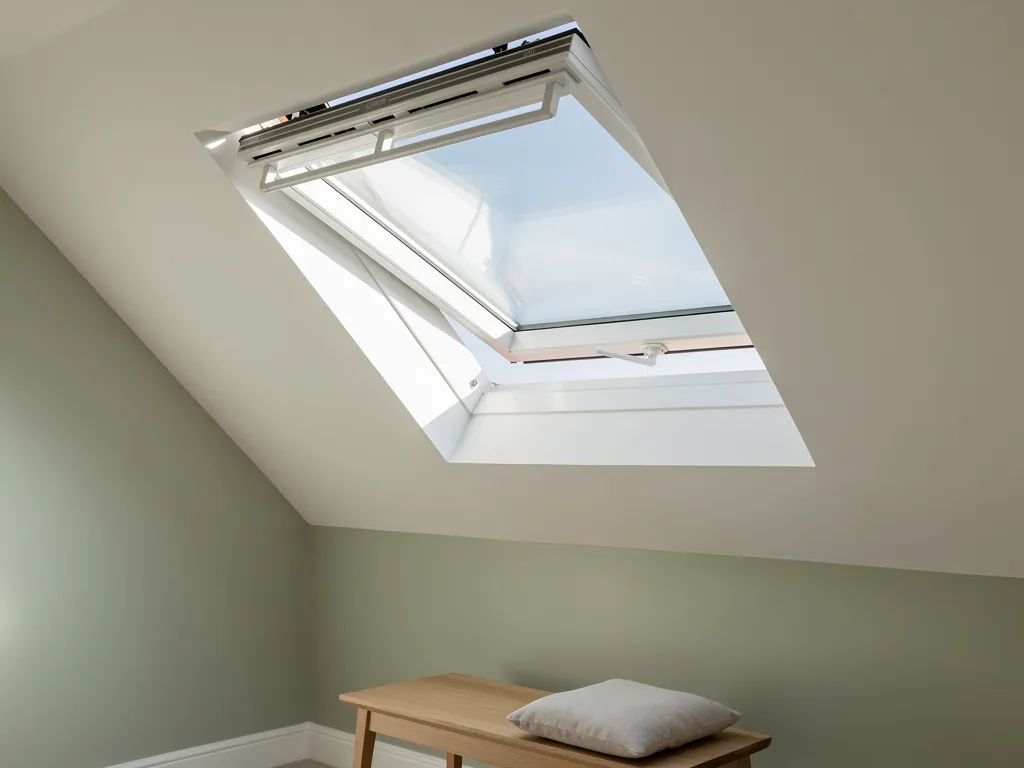
Which room asks for what
A roof window is bought for a particular room. The room sets the noise to plan for, and the noise sets the glazing. Walking through the usual loft rooms shows how different the answers are.
A loft bedroom hears the sky at both ends of the day. Early departures from Gatwick arrive over Crawley and its villages when the house is still asleep, and rain on a sloping pane sounds loudest when the room is dark and quiet. Here the noise reduction pane is the natural choice, and the window position matters as much as the glass. The page on which VELUX size suits a loft bedroom covers the size side of that decision.
A nursery adds a second reason: the room must stay calm and dim at nap time. The glazing choice sits with the blind choice and the ventilation choice, and the three are made together. A nursery is also a room where the sash will be shut for long stretches, which is when the glazing is doing its work.
A home office has a different quarrel with noise. Rain is a steady wash that some people like and others cannot work under, and a call picks up every hiss and drum. A quiet pane helps, and so does the blind, because it dampens the echo in a room full of hard surfaces.
A landing or stairwell window exists to bring light into the middle of the house. Nobody lingers. The standard pane is enough here, and the money is better put into a larger sash or a second window.
A bathroom has its own priorities, because steam, moisture and privacy come first. The quiet question is secondary there, and the guide to fitting a VELUX window in a bathroom explains why.
The glass is one part of a longer chain
A quiet pane in a poorly fitted window is wasted. Sound takes the easiest route into a room, and when the glass is good, the easiest route moves to whatever else is weak.
The fitting around a VELUX window is a set of parts, each of which can carry sound in or hold it out. The frame is fixed to the rafters, and how firmly it is fixed decides how much vibration passes from roof to room. The flashing joins the frame to the tiles or slates, and VELUX sells flashing kits matched to different roof coverings, which the guide to VELUX flashing types explains. Between frame and roof there is an insulation collar, covered in the page on the VELUX insulation collar and underfelt collar. A collar fitted without voids does two jobs: it keeps the heat in, and it closes a route for the sound of the loft void to reach the room.
Inside, the lining and the plasterboard edge need to be sealed, so the gap behind the lining is not an open tunnel. That is a finishing detail, and it is easy to get wrong when a job is rushed. We seal the joints and the board edges at the end of the job, and the quiet spec says how the finish is done.
Get the order right in your head and quotes become easier to compare. A cheaper quote with the better pane and a careless fitting is the worse buy. A dearer one that lists the flashing kit, the collar and the lining finish is telling you what it plans to do.
Upgrading a window you already have
A quieter pane does not always mean a whole new roof window. Whether the existing one can take better glass depends on its age, its condition and what the current range offers.
The first step is to find the data plate. It carries the window's type and size, and it is what lets us look up what your window was built as. If it has gone missing, the page on where the data plate sits shows the usual places, and how to find your VELUX size if the plate is missing covers the measuring route.
The second step is an honest look at the seals and the sash. New glass in a tired unit leaves the gasket and the hinges at their old age, and the room may go on hearing the same noise through the same gap. The fuller answer is in can a VELUX be upgraded to quieter glass. Where the frame is sound and the opening is square, a new sash is sometimes all that is needed, and the page on the VELUX replacement sash sets out when that holds. Where the unit is at the end of its life, renewing the whole window is the tidier answer, and the new one is sized to the old opening as described in will a new VELUX fit my old opening.
When a whole unit is renewed, the sash, the seals and the glass arrive together and are set square at once. That is a large part of why a replacement can sound quieter than the window it replaced, even before the glazing option is considered. The window has stopped moving in its frame.
A window that has misted between the panes has failed at its seal. That is a replacement question, and misted and failed rooflight replacement explains how we approach it.
Opening the window undoes the glazing
The pane only works while the sash is shut. A VELUX window that is open for air lets the room hear everything, whatever glass is in it. Ventilation and quiet have to be planned together.
This is the honest limit of any glazing option. A loft bedroom in a warm spell wants the window open and the room quiet, and these two wants pull in opposite directions. A sash left wide gives up the glazing completely. VELUX windows carry a ventilation bar that holds the sash open a small distance, described in the VELUX ventilation bar and handle explained. A small opening is a smaller hole for noise than a wide one, and it still gives the room a flow of air.
The opening action differs between models, and so does what the room hears when the sash is part open. Rain on a part-open top-hung sash behaves differently from rain on a part-open centre-pivot, and a bedroom in a busy street may favour one over the other. The grid in the GGL, GPL and GGU guide lays those differences out.
Where a bedroom cannot easily be reached by hand, an electric opening model can be set to air the room on a small opening and close itself. That route is covered in VELUX INTEGRA electric roof windows. A rain sensor on such a window closes the sash when rain begins, and the answer on what the VELUX rain sensor does explains the detail. Part F of the Building Regulations sets ventilation requirements for a converted room, and the survey checks the room against them. We install to current Building Regulations, and we handle the Building Control notification where the work is notifiable.
Blinds soften the room, and the glass does the blocking
A blind and a pane do different jobs. One calms the inside of the room. The other decides what gets in from outside. They are often mixed up on a quote.
A loft bedroom is a room of hard, flat, angled surfaces, with a plasterboard slope, short walls and a bed. Such a room rings. A blind hanging across the reveal, along with curtains and a rug, takes some of that echo out, and the room feels softer for it. It does not stop the sound getting through the glass in the first place. The page on whether VELUX blinds reduce noise takes that question on its own, and which VELUX blind is best for a bedroom deals with dark and light.
Put briefly, choose the glazing for what comes in from outside and the blind for how the room feels and how dark it gets. Expecting a blind to do the glazing's work leads to disappointment, and so does the reverse.
Writing the choice down
A decision made in conversation is easy to lose. Written down, it can be checked against the quote, the delivery and the finished window. That is the purpose of the quiet spec.
At the survey we go into the room and listen. We note whether the noise is aircraft, road, rail or rain on the slope, and which way the roof faces. We measure the opening, read the data plate if there is an existing window, and look at the lining and the roof covering. From that we propose a glazing option, a flashing kit, a collar and a finish, and we give a reason for each.
The spec that comes with the quote lists, in plain words:
- the noise heard at the survey and the room it affects;
- the VELUX type, size and named glazing option;
- the flashing kit and the collar for the roof covering;
- how the lining and upstand are finished inside and out.
Because the glazing is named, you can set it beside any other quote line by line. The quiet spec shows the layout. For the whole range of VELUX work, from sizes and finishes to warranties, start at the VELUX window installation hub.
The work itself carries a ten-year workmanship guarantee, which covers our installation. It is separate from the manufacturer's own warranty on the product, and the page on how a VELUX warranty differs from an installer's guarantee explains the difference. If you want a room listened to before a pane is chosen, use the quote form on this page, or send a message on WhatsApp.
Questions to ask before you choose a pane
These are the points that come up when a buyer is deciding whether the noise reduction option is worth adding to a VELUX order.
Is the noise reduction option worth it for a bedroom?
For a room where someone sleeps under the glass, it is a sensible choice, particularly under a flight path or beside a busy road. The survey decides how much difference it is likely to make in your room, and the quiet spec records the reason. For a room nobody lingers in, the standard pane is a fair answer.
Can I add the option to a window I already have?
Sometimes a new sash with the better pane is possible, and sometimes the whole unit is better renewed. It depends on the age of the frame, the state of the seals and what the current range offers for your size. The data plate is the starting point, and the survey settles it.
Will a quieter pane make the room darker?
Clear laminated glass lets daylight through, so the room stays bright. A tinted or solar control coating is a separate choice that changes the light, and it should be named as such on the quote.
Does the option stop aircraft noise completely?
No glazing does that. A roof is a light structure, and a low rumble moves the whole house, not only the window. The pane, the seals, the frame and the lining together make the room feel calmer, and the window position can help too. We say plainly at the survey what the glazing can do and what the roof will still let through.