Search for the best roof window brands in the UK and you meet a wall of logos, each with a colour range and a slogan. The useful comparison is much plainer. Every serious skylight window maker sells a pitched-roof window that opens, keeps the weather out and brings daylight into a sloping ceiling. What separates them is a short list of practical details: the glass options, the flashing kits, the blinds, the ways of opening and the support you can count on in ten years. This guide walks through those details in the order they matter, and gives you the questions to ask any supplier, including us, before the order is placed.
Why the logo is the smallest part of the choice
A roof window is a piece of engineering set into a wet, windy, sloping surface. The maker matters, but the room, the roof covering and the pitch matter first.
Start with what the window has to do. A loft bedroom needs ventilation and a way of darkening the room. A stair landing needs light and little else. A bathroom needs moisture to leave. A kitchen extension with a lean-to roof needs a window low enough to reach. Those jobs call for different openings, different glass and different accessories, and the same maker may serve all of them well or only some of them well.
The firms worth a place on your shortlist are the established makers who sell through builders' merchants across the UK. VELUX is the name the public knows best. Fakro, Roto and Keylite are also widely sold here, and there are others. Rather than ranking them, which would only repeat a catalogue, it is more honest to compare the things you can check on the day. Each maker publishes its own data sheets, size charts and installation instructions. Read those for the exact product you are offered, because ranges change and a detail true of one model may not hold for the next.
We install and replace roof windows, and we handle the Building Control notification where the work is notifiable. Our own page on VELUX window installation covers that maker in particular. This guide stays neutral, and sits under our roof window installation hub.
Six things that actually differ between makers
The real variation falls into six areas. If a salesperson cannot speak to each one for the model on the quote, keep asking.
| Area | What varies | Why it matters |
|---|---|---|
| Glazing | Pane build, inner laminate, coatings | Sound, warmth, safety |
| Flashings | Kit per roof covering, depth | Weather and neatness |
| Opening | Pivot, top-hung, electric, solar | Reach and ventilation |
| Blinds | Range, fit, electric options | Sleep and glare |
| Sizes | Standard grid, rafter fit | Cutting and cost |
| Support | Spares, advice, terms | Years after fitting |
The rest of this page takes them one at a time. None of them is about which maker has the louder advertising.
Glazing: the pane build decides what the room hears
Glass is where a bedroom is won or lost. A window in a sloping roof faces the sky, so it takes rain, hail and aircraft sound more directly than a wall window does.
Every maker offers a choice of glazing builds for a given window. The names differ from firm to firm, but the pieces are the same: the outer pane, the cavity, the inner pane and the coating on the glass. The inner pane is the one to look at first. A laminated inner pane has a clear interlayer bonded between two sheets of glass. It holds together if it breaks, which suits glass over a bed or a stair, and the interlayer also dampens vibration, which is what you hear as a hiss or a drum when weather hits the outer pane.
So the question for any brand is specific. Which glazing options exist for this exact window size? Is the inner pane laminated on the standard build, or only on an upgrade? What is the outer pane made of, and how thick? Does the window come with a coating that helps keep heat in? Answers to these are printed in each maker's technical literature. Ask to see the page for your model, not the headline figure.
We never quote decibel figures on a quote. A number from a laboratory tells you little about a bedroom in Ifield, because the room, the roof and the noise all change it. We describe quiet by specification instead, and it goes into the written quiet spec that comes with every quote. Our page on acoustic glazing for loft roof windows explains the build in more detail, and the answer on whether a bedroom window should have laminated glass is short and direct.
Rain is a separate question. Some of the noise in a downpour comes from the pane, some from the flashing and some from the roof covering around the frame. Are roof windows noisy in the rain? deals with the parts in turn. For brand comparison, the point is that the glazing build is one factor among several, so two windows from different makers can sound very alike if the glass is alike.
Flashings and the roof covering you actually have
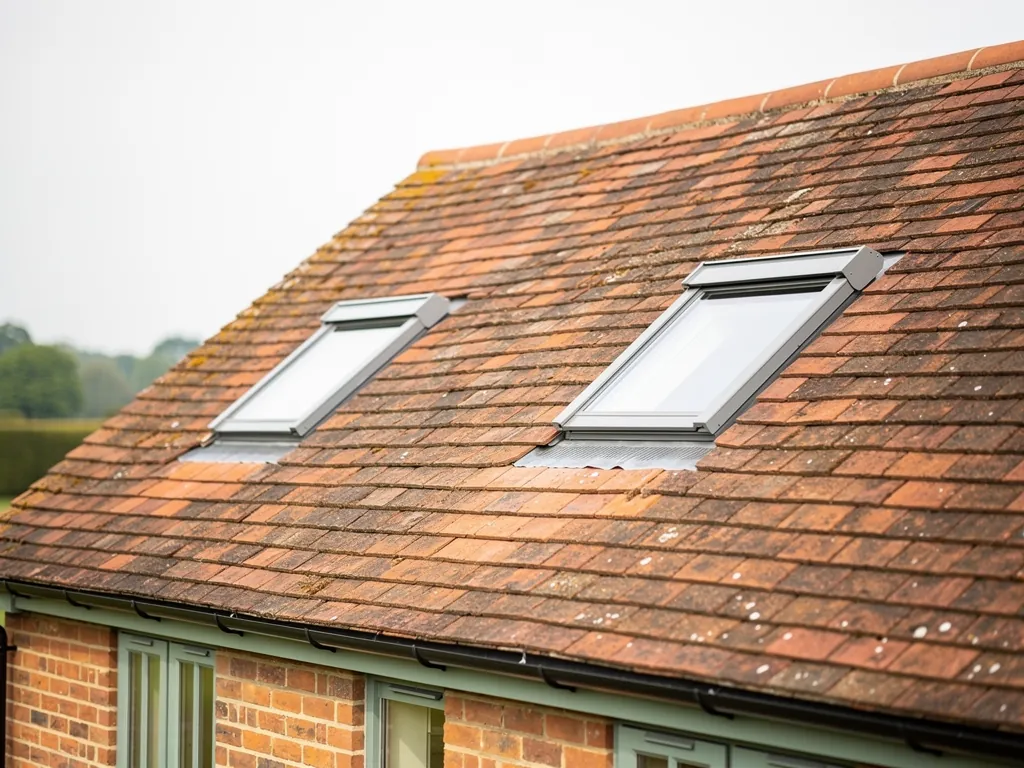
A flashing kit joins the window frame to your tiles or slates. It is the part you never see from inside and the part that decides whether the job stays tidy and dry.
Makers sell flashings matched to the roof covering: plain tiles, interlocking tiles, slates, profiled sheets and flat-profile coverings each need a different kit. The depth of the flashing has to suit how thick the covering is. A kit made for a thin slate does not always suit a deep, bedded concrete tile, and the reverse can be true too. The installer has to read the roof, choose the right kit from the right range and fit the lead or aluminium dressing so that water runs over it and never behind it.
Here the brand comparison is really a question about your roof. Good questions to ask include:
- Which flashing kit is specified for my roof covering, and what is its catalogue reference?
- Is the kit for a single window, or a combination kit if two windows sit together?
- How does the kit deal with the low side of the frame and the head at the top?
- Is an insulation collar or a sealing kit included, or priced separately?
Two of our guides go into the detail. Roof window flashings for tiles and slates explains the parts of the kit, and how a roof window is installed follows a whole job from the first tile lifted to the lining finished indoors.
Opening styles, sizes and the handle you can reach
Makers offer the same small set of movements. The differences lie in which ones they sell for your size and pitch, and how the controls feel in daily use.
The common styles are the centre-pivot, where the sash turns on a horizontal axis, and the top-hung, where it swings outwards on hinges at the head. Some makers also sell combined or hybrid sashes, roof balconies and fixed windows. Electric and solar-powered versions exist across several ranges, which suit windows out of arm's reach. Our guide on centre-pivot against top-hung roof windows explains how each moves and where each suits. Which way should a roof window open? answers the practical version of the same question.
Size is the next difference, and it is quieter than people expect. Makers work on standard sizes that suit common rafter spacings. If your rafters are the usual distance apart, a standard size slips between them with little cutting. If not, the choice may come down to which maker has a size that fits, rather than which one you liked in the showroom. The guide to standard roof window sizes and rafter spacing sets out the logic. A window that needs no rafter trimmed is often a simpler, tidier job, and our answer on fitting between rafters says when that is realistic.
A few questions sort the field quickly:
- Which sizes fit my rafters without trimming?
- Where will the handle sit once the window is at the height I want?
- Does the window open wide enough to clean the outer pane from inside?
- If the window is for escape from a bedroom, does the opening meet the size rules for that?
That last point belongs to the building regulations, not to any brand. The answer on fire escape size gives the working figures, and it applies whichever name is on the frame.
Blinds and accessories: check the ecosystem before you commit
A roof window is sold with a family of blinds, awnings and controls. Those accessories are often made to fit that maker's frame and nobody else's.
This is the most useful piece of brand logic for a buyer. Blinds for a roof window run in side channels fixed to the sash. The fit is tight, and the blind is sized for the window. A blind from one range rarely drops into another maker's window. So the window you choose today tells you which blinds you can buy for the next ten years, and which ones the next owner of the house will be able to replace.
Ask which blinds are made for the model, what the choices are for blackout, pleated and roller styles, and whether outside awnings or shutters exist for summer heat. Ask whether the electric blinds run from the same control as an electric window. For a nursery or a bedroom in a house near the flight paths, where early light matters as much as noise, the blind is half the comfort of the room. Our guide to blinds for roof windows compares the types, and a second answer covers the best blind for a nursery.
Electric accessories deserve a separate line. A powered window or blind needs a power supply, or a solar panel and battery, and a controller. Each maker has its own system, and they are not usually interchangeable. If you plan to add electric operation later, ask now whether the window you choose can take it.
Spares, support and the written terms
A roof window lasts for decades, and the company that made it may change range names long before the window comes to the end of its life. So ask about the long game.
Three questions cover the ground. Will the maker still sell spare sashes, seals, handles and blind parts for this model in ten years? Does the maker publish technical data and installation instructions that are easy to find, and keep old ones available? And what are the written terms of the manufacturer's own guarantee, including what it covers, what it excludes and who you claim through? Read the wording itself. A phrase on a sales sheet is not a guarantee.
Separately, our own 10-year workmanship guarantee covers the installation. It is a workmanship guarantee, not insurance, and it sits alongside any product terms from the maker. Keep the two documents together with your quote, your quiet spec and the Building Control paperwork.
It also helps to ask how long the window takes to arrive. Some sizes and glazing builds are held in stock by merchants, and others are made to order. The wait can change which product suits the job, particularly where scaffolding is booked and the roof is open for a limited time. A window available quickly in a slightly different build is sometimes the better choice than a perfect one that arrives weeks later, provided the build still suits the room.
Reading a quote so two brands can be compared fairly
Two quotes for two makers are rarely comparing like with like. A fair comparison lines the same items up side by side.
Before choosing, make sure each quote states the same things. The maker and the model name are the obvious start, then the exact size. Next comes the glazing build, written out, including the inner pane. Then the flashing kit and its reference, the lining and finish inside, and the blinds if included. After that, the scaffold or access, the removal of the old unit if there is one, and the making good of plaster and decoration. Lastly, check who handles the Building Control notification, since some work on a roof needs it and the paperwork belongs with the house.
If a quote names only a brand and a size, it has left out the parts that decide the result. Our page on costs explains what drives the total, and the quiet spec shows how we write down the glass, the seals and the upstand for a room. For a first look at your own roof, get a quote and we will set out the options in writing.
When the brand is already chosen for you
Sometimes the decision is made before you start. You may be replacing a window in a row of matching roof windows, or you may have an existing blind system you want to keep.
If the aim is to match what is already on the roof, the simplest route is usually to stay with the same maker and find the nearest current size. Frame depth, colour and sash shape can differ from one generation of window to the next, so a match is rarely perfect, but it can be close. Where the old window has failed, a replacement with the same outline usually needs little change to the flashing and lining, which keeps disturbance low. Our page on misted and failed rooflight replacement covers that route.
Where you are starting from scratch, such as a new loft room, the choice is open, and it should follow the room. The loft conversion roof windows guide sets out how many windows, what size and what height to plan for. Choose the glazing and blinds that suit the bedroom or study first, then pick the maker that offers them for the sizes your rafters allow.
Questions people bring to a brand comparison
These come up when a shortlist is being narrowed. Each answer points to a check you can make yourself.
Is the best-known maker always the best choice?
Not automatically. A well-known maker usually has wide availability of parts, sizes and blinds, which is a real advantage. But a lesser-known range may offer a size that fits your rafters better or a glazing build that suits your room. Compare the model specifications, not the reputation.
Can I mix blinds from one brand with windows from another?
Usually not. Roof window blinds are built to fit a particular frame and run in channels made for it. Ask the supplier for the blinds made for your window, and confirm the catalogue reference before you buy.
Does a dearer window mean a quieter room?
Not by price alone. Quiet comes from the glazing build, the flashing and the roof covering around the frame. Ask what the inner pane is and how the window is sealed in. Put the answer in writing, which is what the quiet spec is for.
How do I check a brand claim I cannot verify?
Ask for the maker's published data sheet for the exact model, and read what it says. If a claim is not in the technical literature, treat it as a sales line. Any supplier, installer included, should be able to show you where a statement comes from.